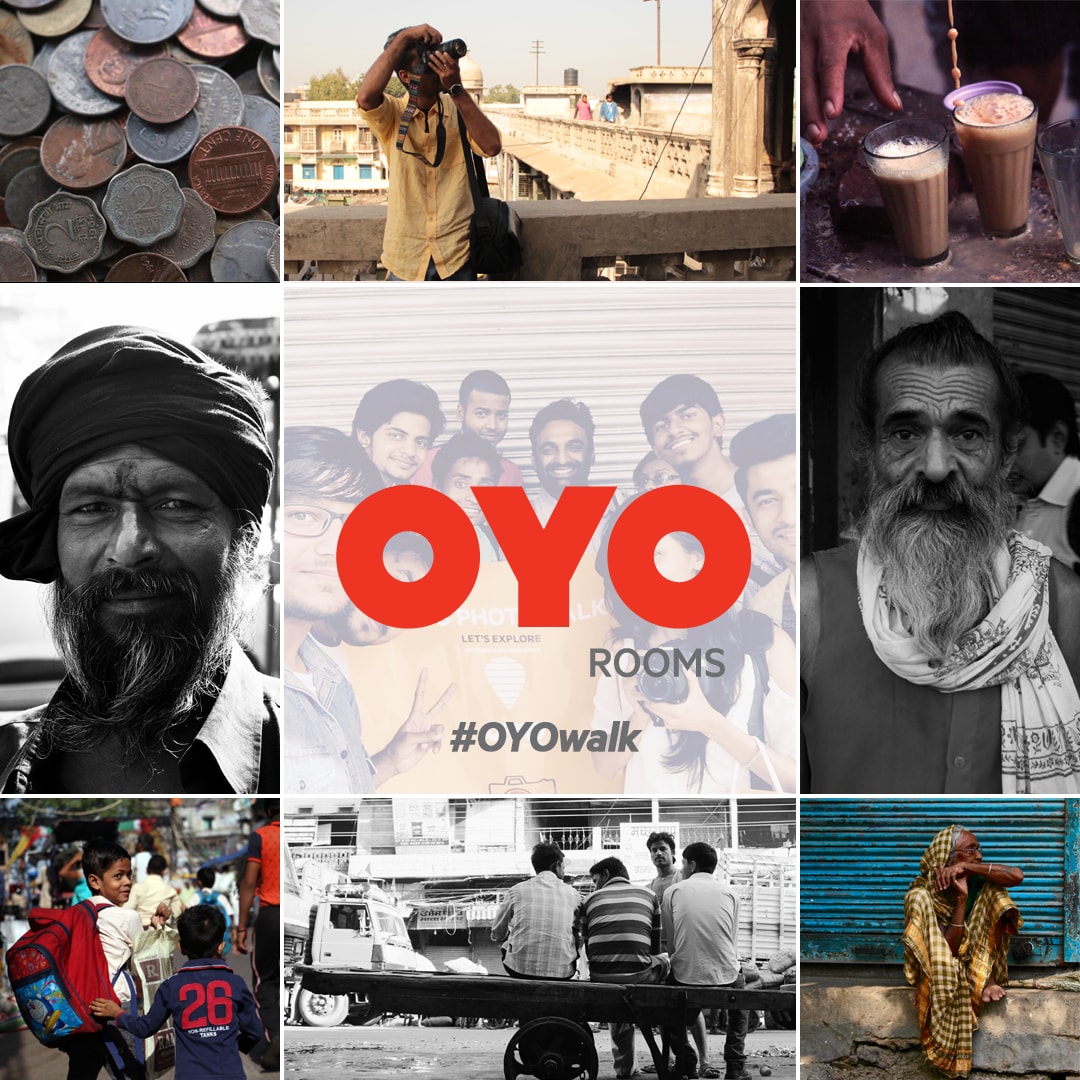
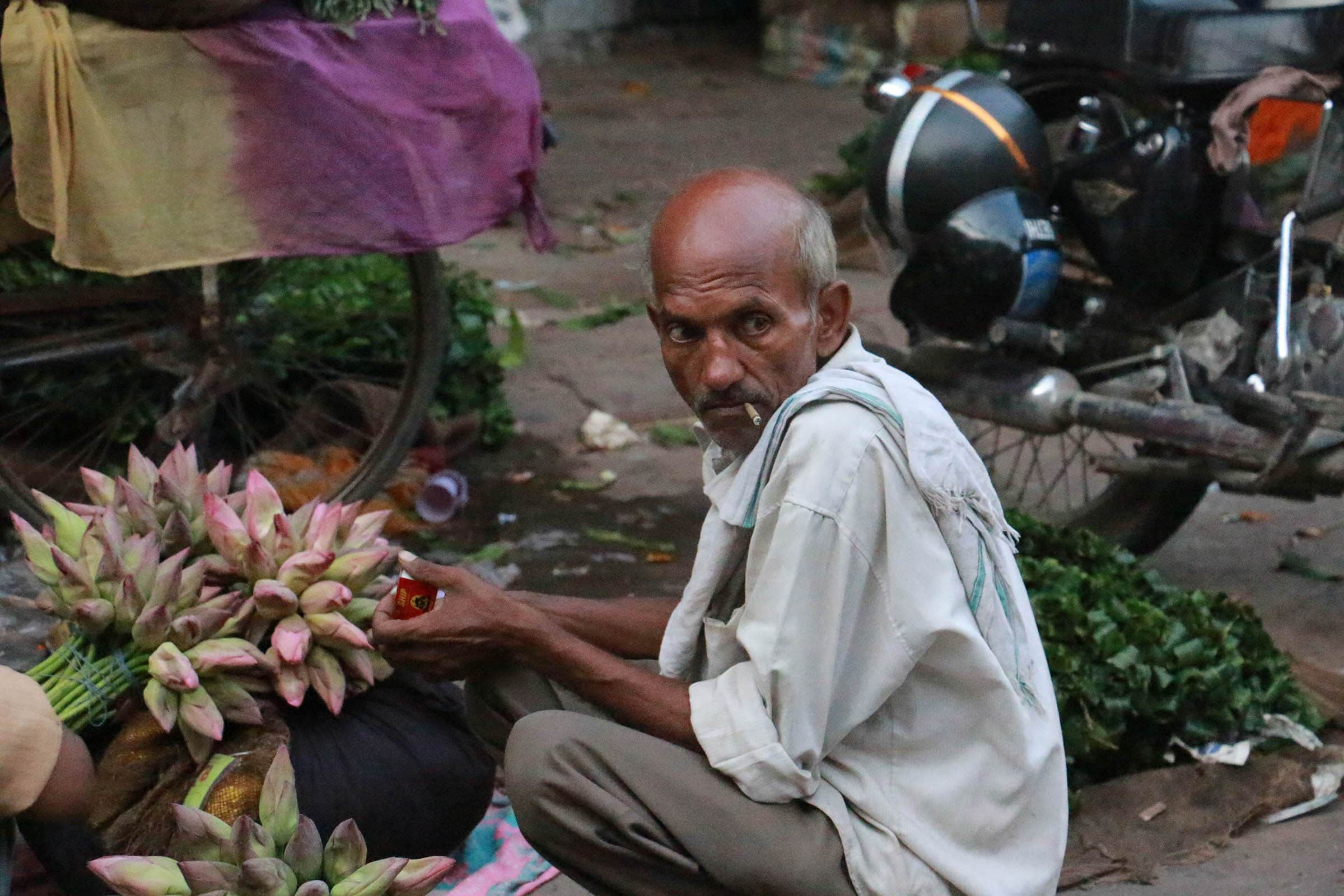
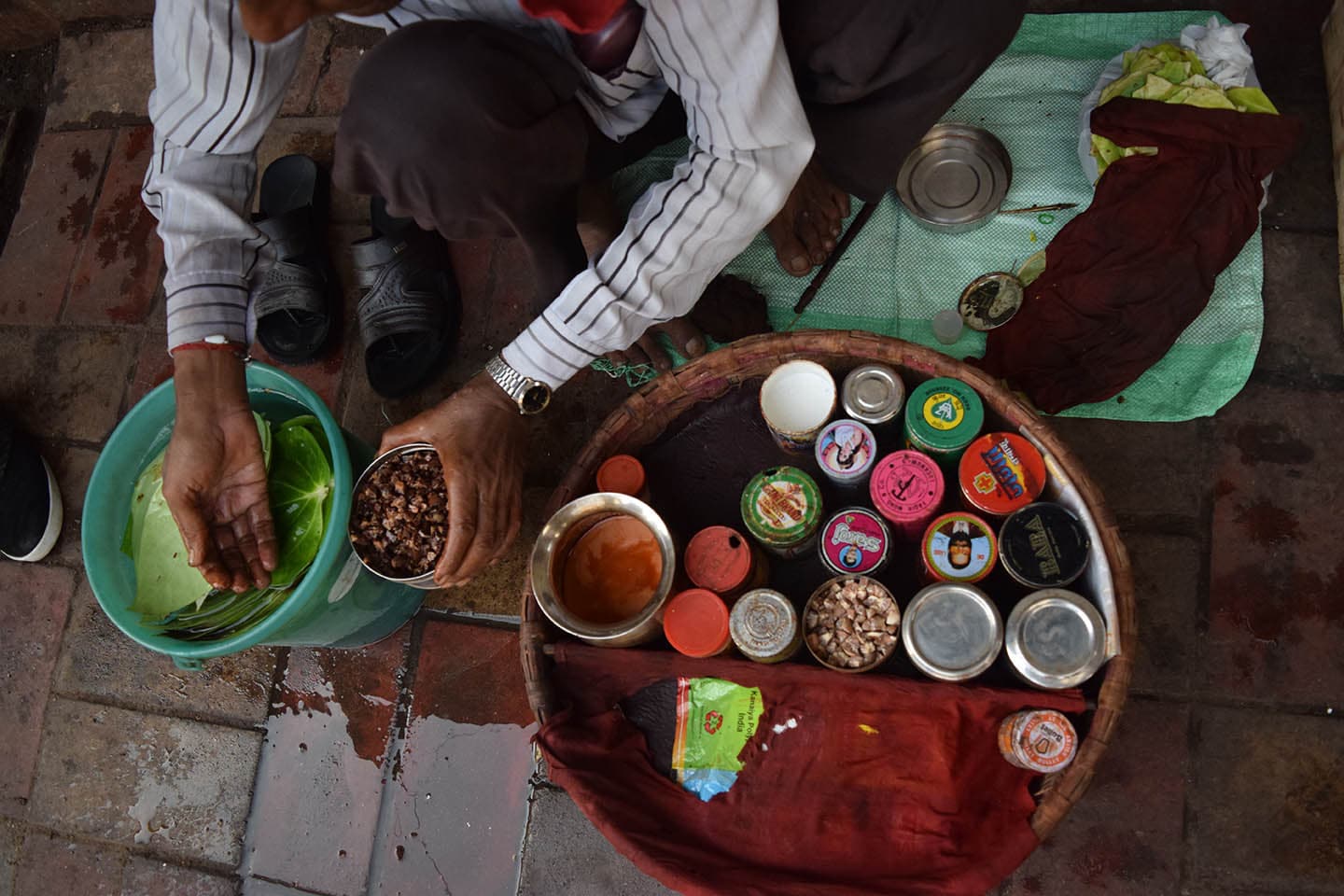
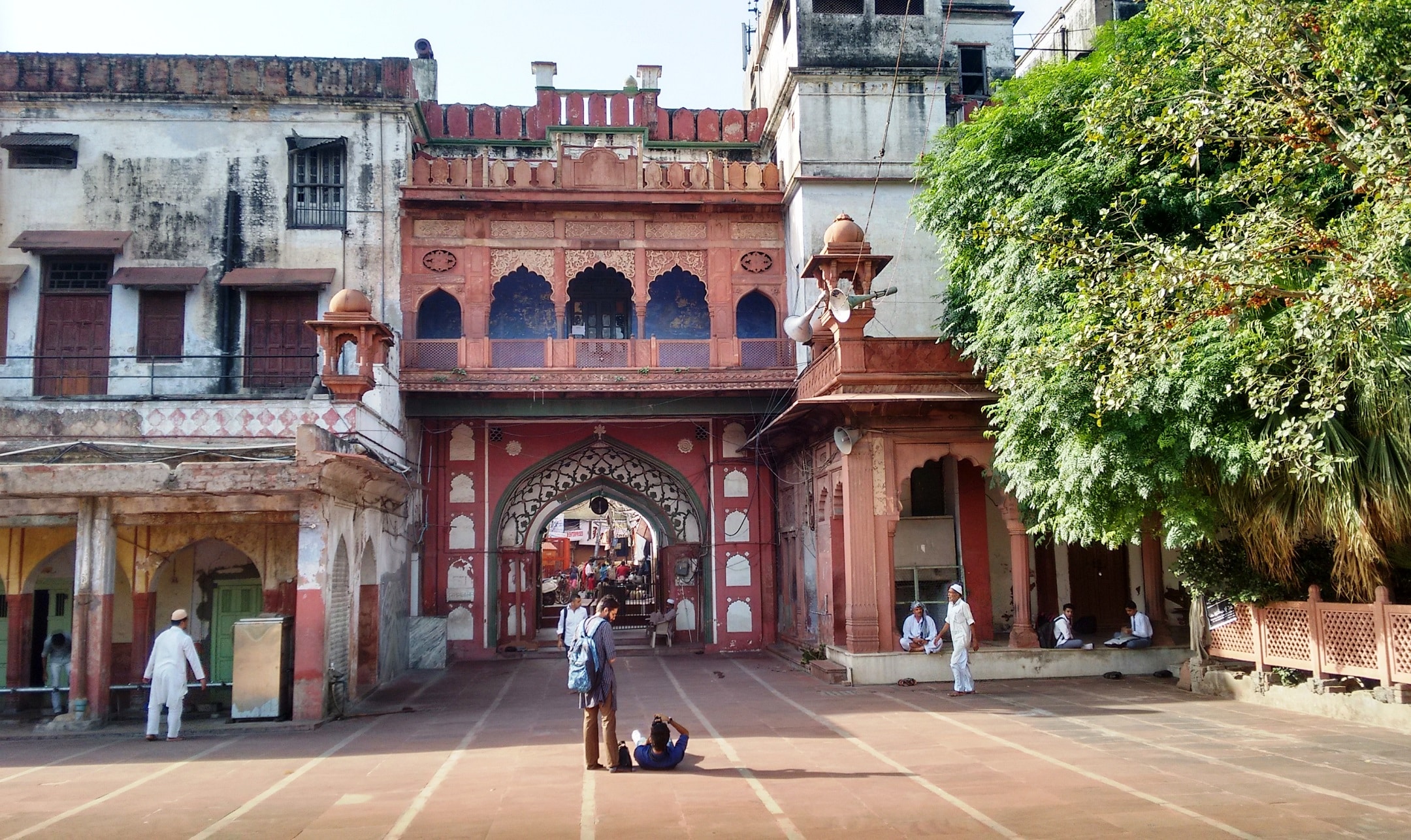
Our community members met last weekend to explore the area from Khari Baoli to Chandni Chowk in Old Delhi through the lens of their camera. Presenting some of the best images from the walk, clicked by or wonderful participants. A big thanks to our friends at NIFT, Delhi for making the event a great success.
OYO Rooms Photo Walk
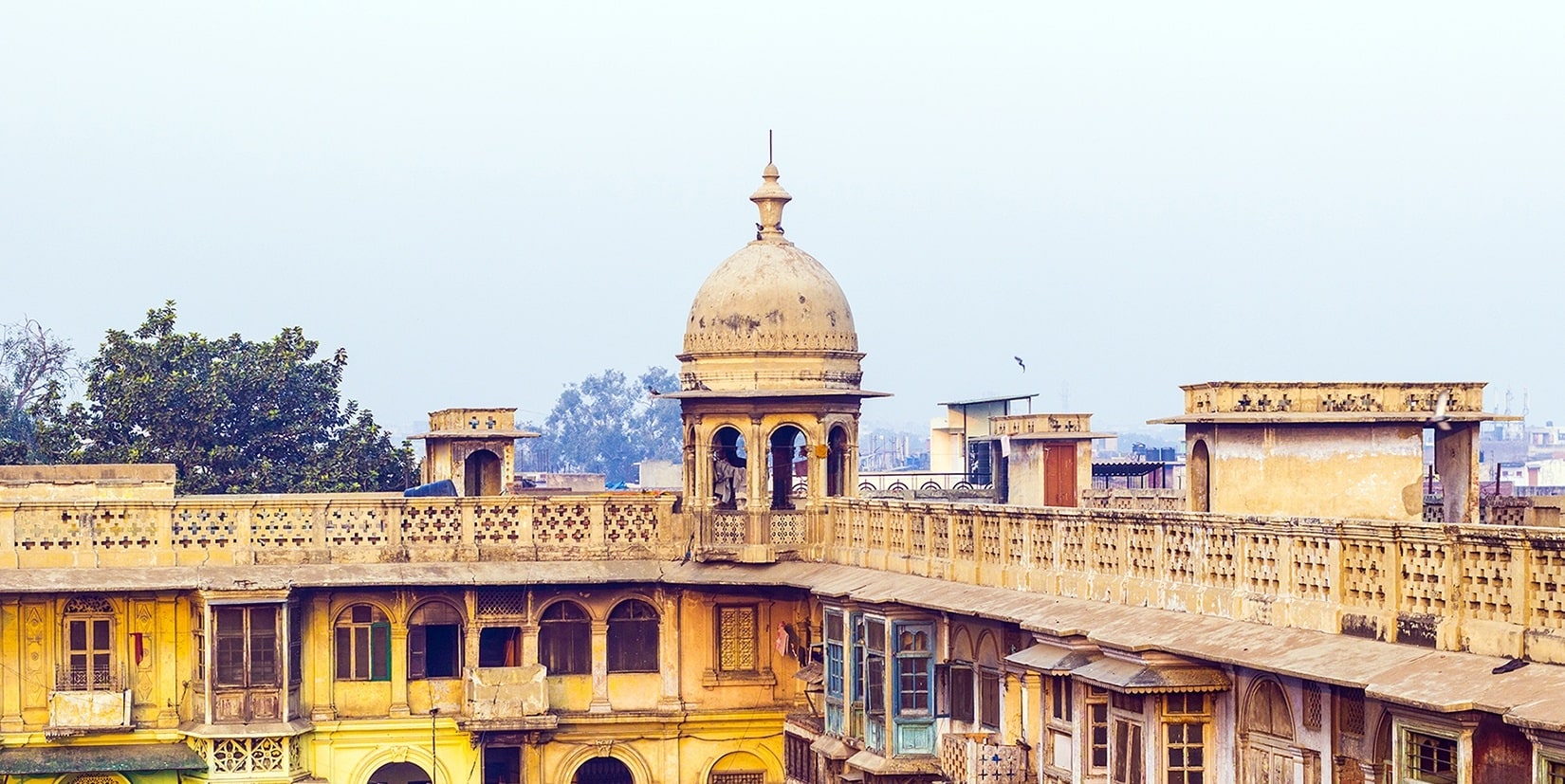
View from a rooftop
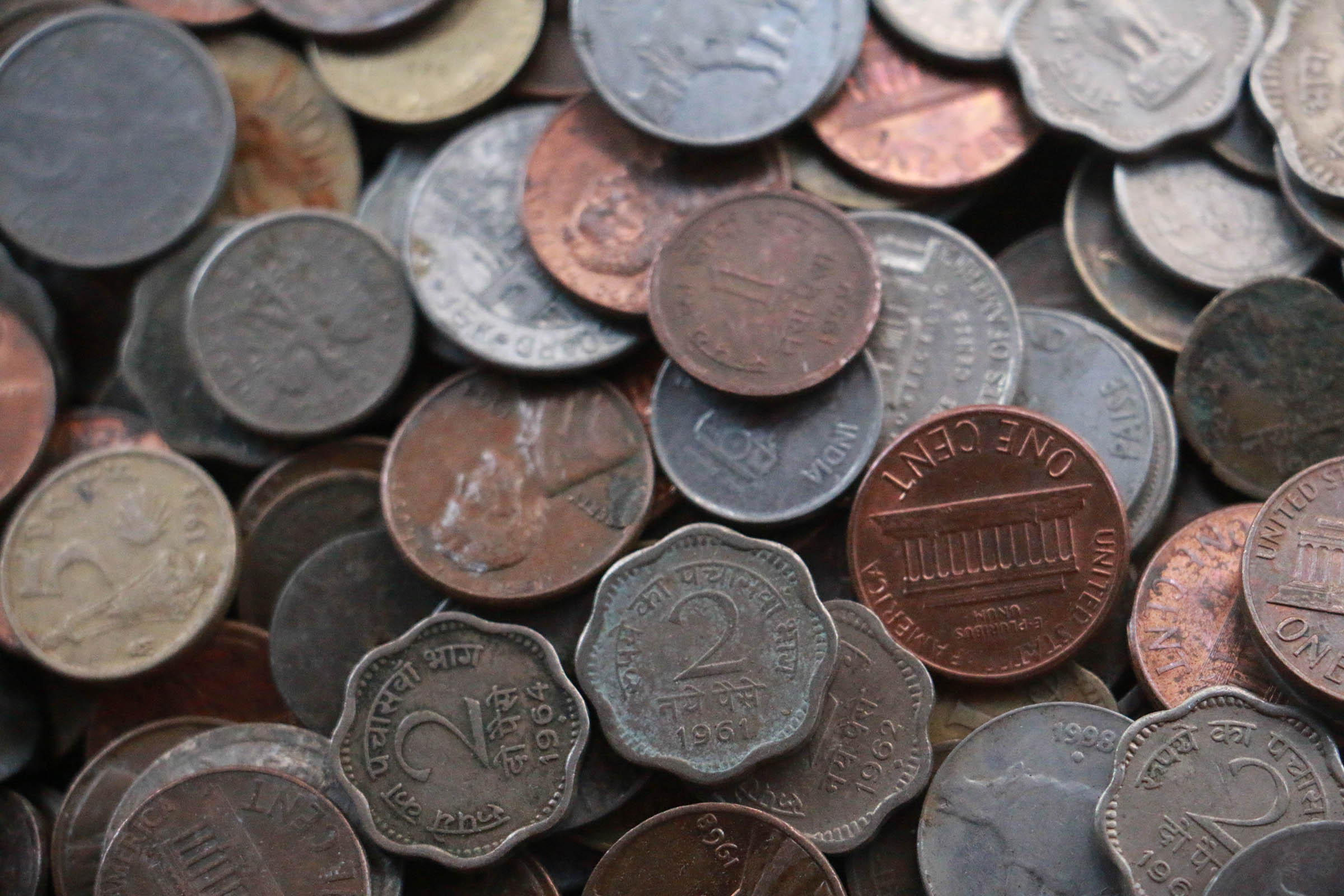
A numismatist’s treasure trove
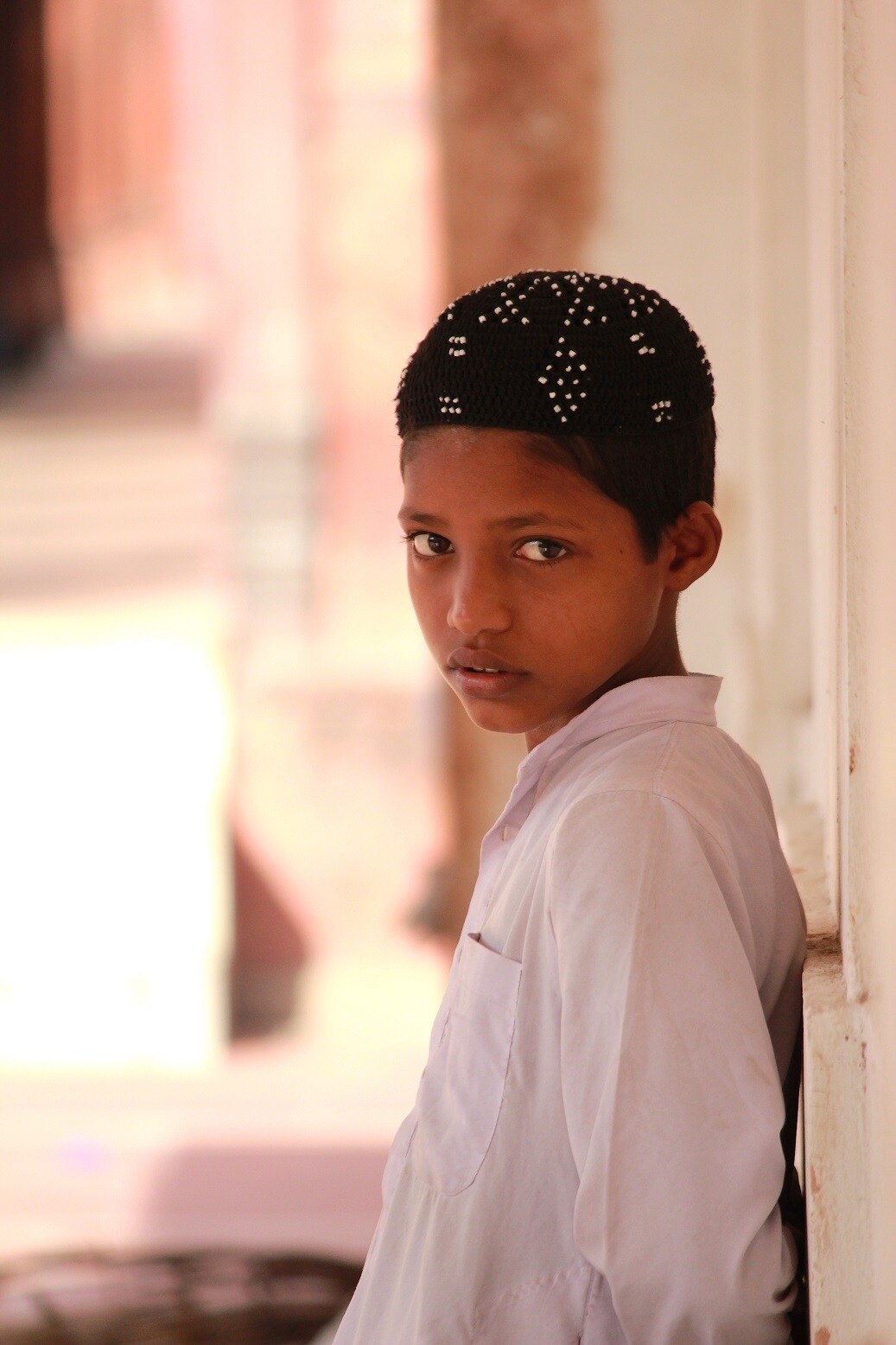
The reluctant model
All set for business
A ‘Paan’ under making
Striving for that perfect shot
To join us on our next photo-walk write to us at blog@oyorooms.com . Stay tuned to our blog to stay updated.
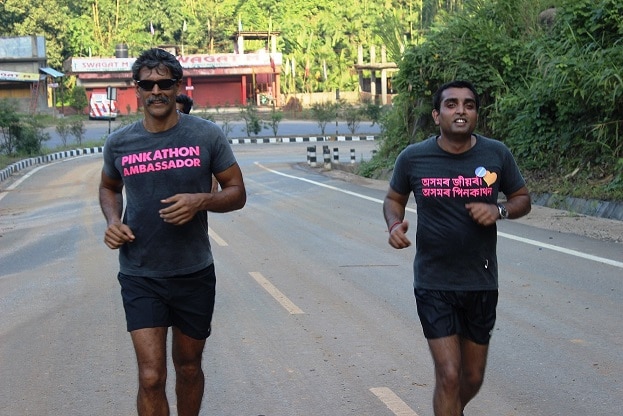
Fellow runner Prasun Choudhary narrates his experience of running from Guwahati to Shillong as part of Pinkathon 2015.
A hectic day was coming to an end. I was on a whirlwind travel schedule and after covering 5 cities in the north-east, I was in Guwahati wrapping my day to leave for Shillong.
A friend of mine was planning to participate in PINKATHON – an all women run. I was lost in my own thoughts till I heard that – Milind Soman the brand ambassador of Pinkathon was running from Guwahati to Shillong to raise awareness for “Women health”. A run from Guwahati to Shillong (80-90Kms approx.) – there was a sudden rush of adrenalin, a childish joy, a happy surprise to be explored.
Though I was totally out of practice but still decided to give it a shot. Two of my friends, Niraj and Sneha, also agreed to join. An early morning start on the outskirts of Guwahati, nice cool breeze, few runners, one poster of Pinkathon, one tagline “Women Health” and a brief photo shoot, and we were on our way.
Queuing up to register
Running is not a science nor an art, it’s pure joy, it’s spiritual. After some time you stop talking to people, you just hear them and a smile is the only response. The mind slowly settles down. It’s like a child, slowly cuddling and sleeping in his bed after moving around randomly in the house from one room to another. Our mind is like that kid; it wants to go in random directions. Let it go, it will get tired after some time and then come back to its home. A long distance running takes you to that situation. You start thinking about everything in the world when you start running. What will be my time, when will I finish, how long will it take, will I be able to do it, will I get hurt, will I use the knee cap, why even I am doing this, what will I do after finishing the run, why I didn’t practice better, look at other runners how comfortable they are? And lot many worldly thoughts. Every thing settles down after 15-20 Km. You no more think of the time to finish, you accept pain as an inevitable part of the process, you don’t worry too much about the finish line, you let others run pass you as you are no more in competition. I think this is the point you start enjoying it.
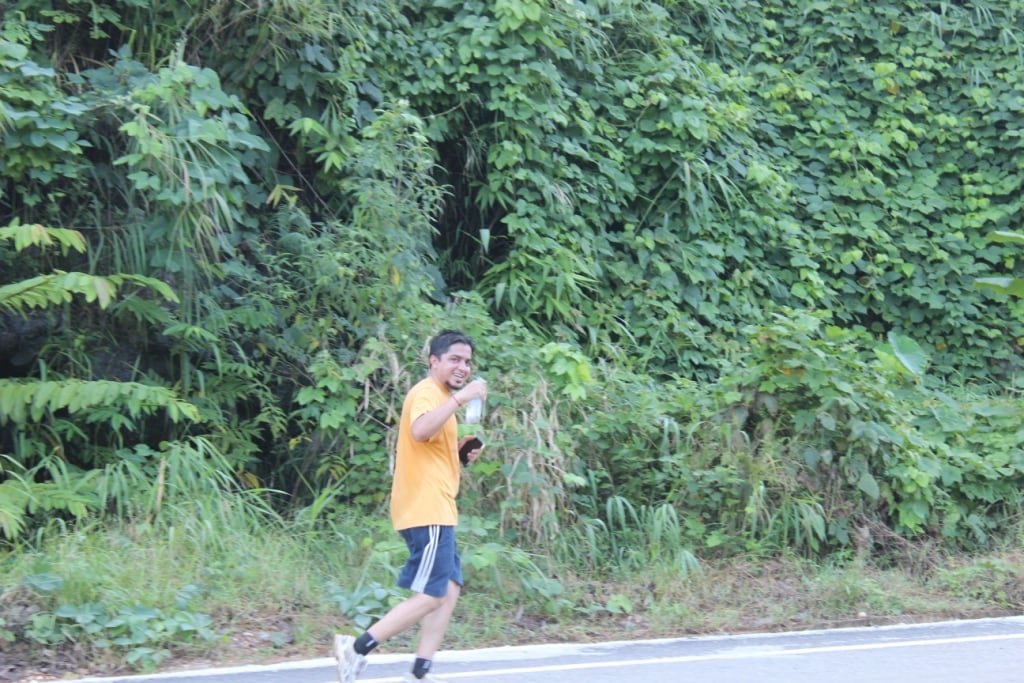
A fellow runner enjoying the run.
I reached this state somewhere on NH-40 between Guwahati and Nongpoh. I was running all alone. Few ahead of me and few behind me, but that didn’t matter. I call this a state of disguised meditation. A state where your body is active but your mind is disconnected from it. You don’t remember that you are running as your mind would have chosen one topic and went deep into it.
I have run multiple marathons, but this was the first run where I was running for a purpose – To raise awareness for women health. Women health, it’s true, it’s such an ignored topic. I started thinking about my mom. How much time did she really give to her health? All I could remember was that she never took care of her health, putting the entire family and everyone else ahead in the priority list. It’s only recently that I see her going for morning walks that too after the doctor has advised her to do so. I think this needs to change. A women’s health should not take a back seat. The change should begin at home.
I decided to call my mom and sister after the run to educate them on basic exercises, which can be easily done at home, in case they are pressed for time. Probably every other home I visualized was fighting some women health issue which had developed over a period of time as these caring ladies never cared for their own health. Suddenly, Pinkathon was making more sense to me. But it should not just be a one-day event, I think the purpose, the idea should be internalized in the daily life of every family. Probably that’s what Pinkathon was trying to do. Create ”Awareness for women health in the mind of everyone”.
“We are approaching Nongpoh, close to the half way mark.” My chain of thoughts was broken and I was brought back to the real world by Niraj’s shout from behind. The temperature had soared and it was scorching hot. It didn’t make sense to continue the run. Even Milind and his team decided to take a long break. We decided to go to Shillong and complete our meetings.
Milind Soman and I running in the Pinkathon
6.30 PM – We had just completed our day in Shillong and I had the option to rest in one of the OYOs in Shillong, when I called Radhika (from the Pinkathon team). Milind and his team had run another 20-30 Km and were still 12-15 Km behind Shillong. I could still be a part of the finish and contribute to the purpose. So I drove back and joined the team. These last few miles were certainly for a purpose. I could have easily decided to just sleep in my hotel room after that 7 hr run in the morning and a tiring second half., but I was driven by my desire to contribute to the cause. Finally, we managed to reach our destination. “Welcome to Shillong “ a big billboard at the entrance of the city greeted us. The run was over – but not the purpose. Hopefully, I will take it forward – in my own ways, maybe by running in more events like this.
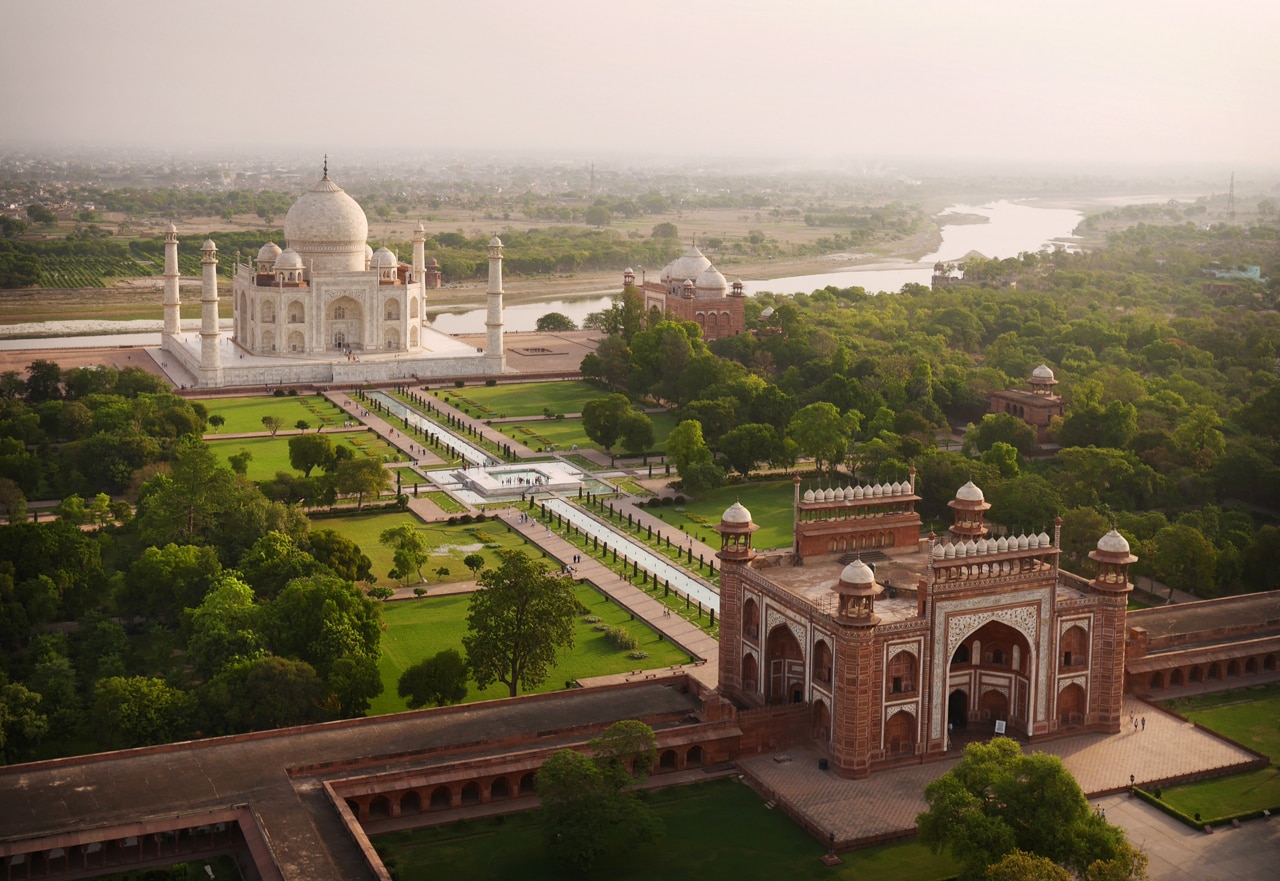
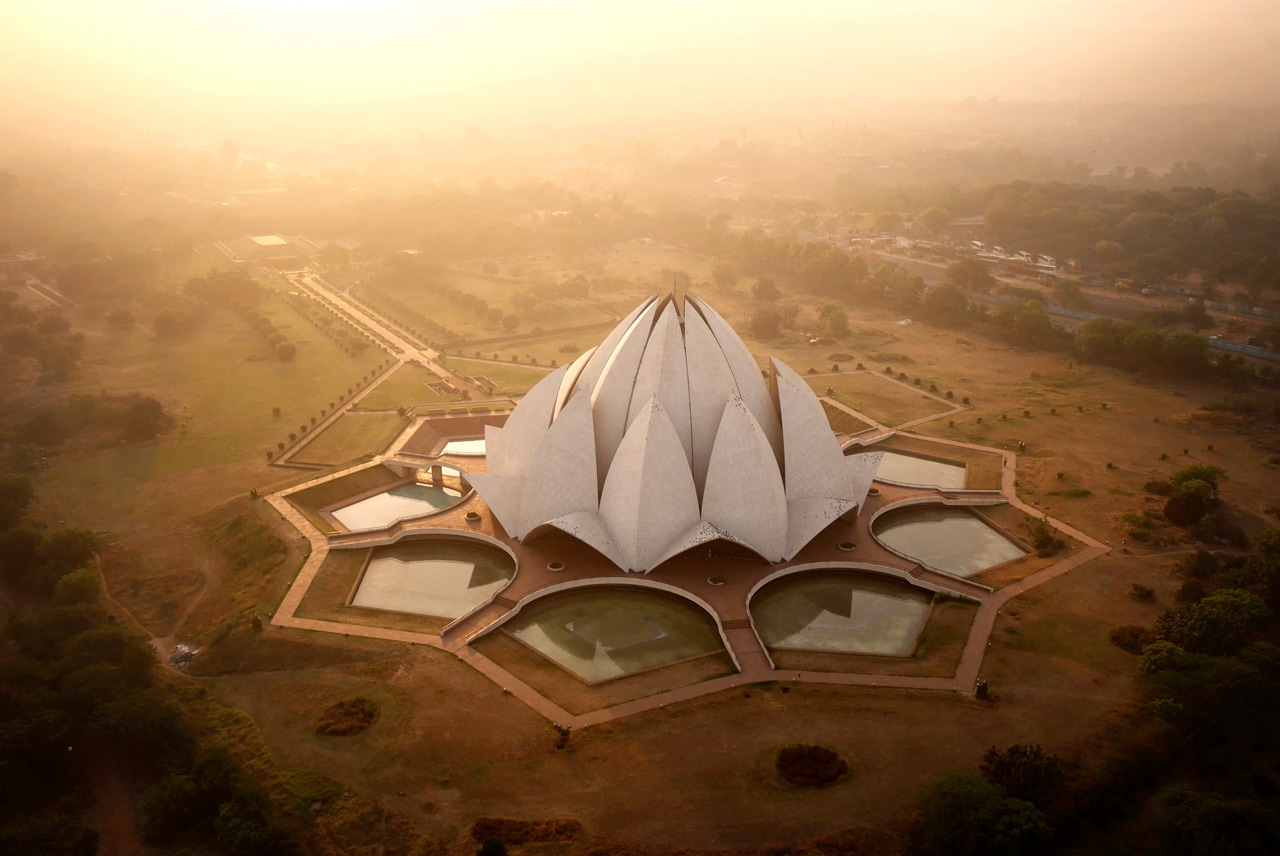
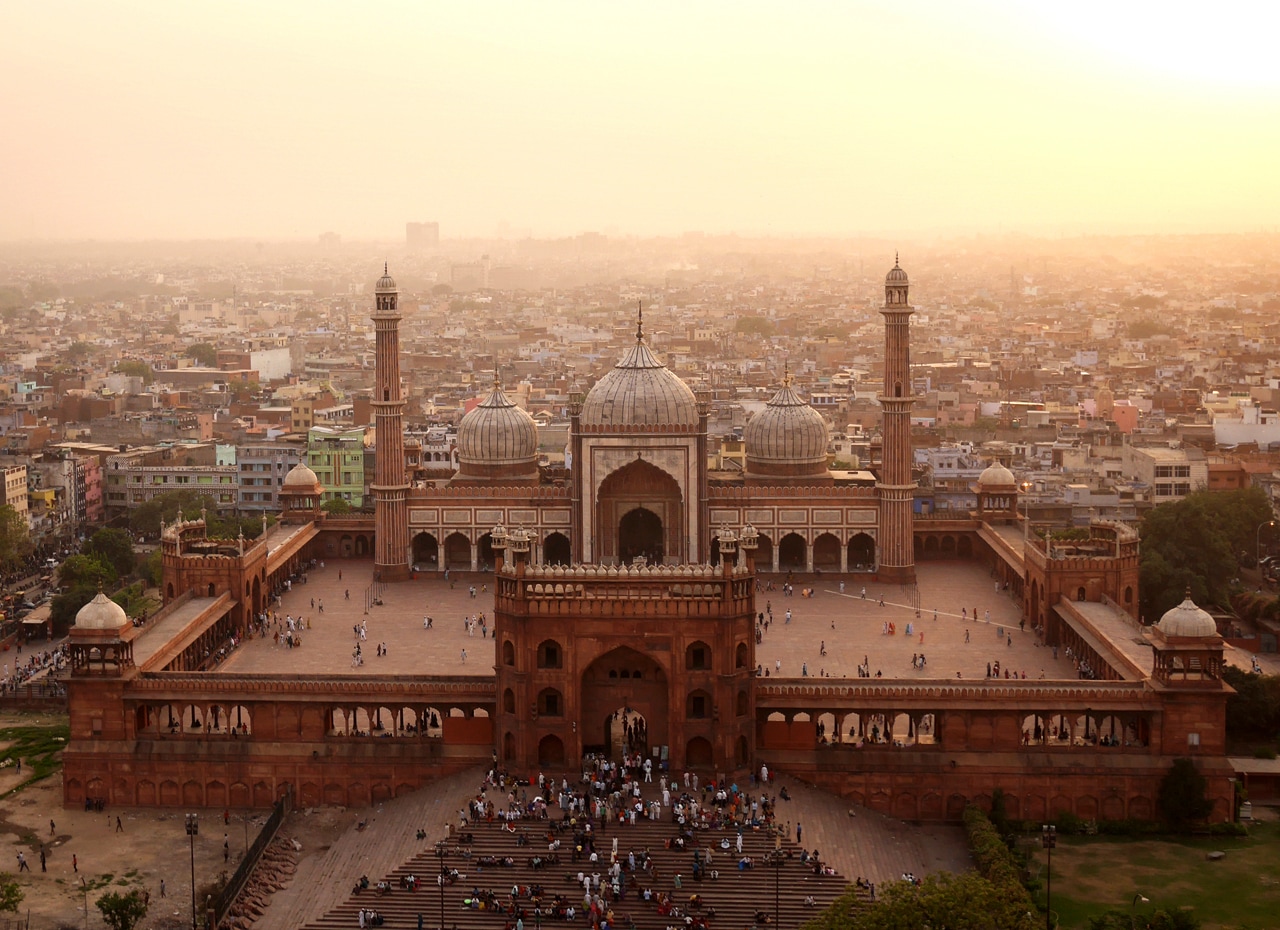
We recently caught up with noted travel photographer Amos Chapple who stayed with us at an OYO in Jaipur. Amos is a photographer from New Zealand and has been published in major news titles around the world. Having travelled in 67 countries, Amos’ camera has captured many beautiful images. Sample these pictures clicked from the sky (all images are the intellectual property of Amos Chapple).
Taj Mahal as the day’s first tourists trickle through the gates.
The Lotus Temple, dotted with pigeons at sunrise. Designed by an Iranian exile, the building serves as the centre of the Bahai’i faith in Delhi.
Jama Masjid – The red sandstone structure was built under the orders of the same Mughal emperor of Taj Mahal fame.
We asked Amos about his work and experiences, and here is what he had to say.
Q. Please tell us the story behind these fascinating images and your starting point as a photographer?
The aerial work dates back to 2012-2013. I was literally checking every week or so for a quadcopter that was going to enable aerial photography, It had had always been a kind of fantasy that one day this would be possible. By 2013, these half-baked companies would pop up then disappear but you could feel the breakthrough was getting closer. When DJI came out with their first Phantom I headed straight to London to pick one up.
My first camera flight was in Latvia. I strapped a little point & shoot onto the drone then lofted it nervously about 15 metres in the air. When I unhooked the camera and looked at the pics I remember thinking “this changes everything.” In terms of photography hardware, we’re probably not going to have another moment like that in our lifetimes.
Q. As a photographer what is the most important aspect of photographer for you?
Emotion, everything else in an image is peripheral. In aerial photography, emotion can be very difficult to convey but occasionally the weather will gift something that lifts an image above the bright, blue-skied postcard shot.
Q. What is your average day like? Do you follow any set routine?
It’s a pretty odd one! I shoot in the mornings & evenings so I’m up at 5 am, then shooting from sunrise until about 9 am, then I grab breakfast and edit. I’ll usually sneak in a siesta in the middle of the day then head out to shoot from around three until sunset. Dinner is the time when I make sure to relax – I always leave the laptop behind and just take a book to the restaurant. After dinner, I edit the evening shots and back them up onto two hard drives then head to bed around ten or eleven.
Q. What are your tips for budding photographers?
Whatever sets you apart as a person sets you apart as a photographer. Maybe you’re good at climbing mountains, maybe you speak an obscure language. Whatever your point of difference is as a person, make the most of that in your photography.
You can check out more of his work on his website.
And here is what Amos had to say about his stay at OYO Rooms Flute Boutique in Jaipur –
“… it’s lovely, exactly what we needed after a long, dusty journey…”
You can book your OYO in Jaipur by visiting this link.
Pune is nothing short of a travellers’ paradise. Strangely, many people are unaware of the great variety of attractions that this city boasts of.
The beautiful green hills and the pristine lakes around the city provide a stark contrast to the modern and fast-paced main city which is fast emerging as one of the top business destinations in India.
The Pataleshwar Cave Temple, carved out of a rock, provides a glimpse into the 8th century architectural style followed in this region.
The Shaniwar Wada was the seat of the Peshwas until the early 19th century, and even though the rulers are long gone, the fort still stands majestically.
Puneris, as the people of Pune are called, are simple people who relish every moment as it comes, but they also know how to celebrate the bigger moments, and they do so in style.
Our fellow traveller Mausam Agarwal went about exploring the hidden gems of this place, and captured some breathtaking shots in this amazing video.
Welcome to Pune, the cultural capital of Maharashtra.
Here are the names of the winners of the #OYOgraphy contest!
1st Prize Ash Kapoor
2nd Prize – Kshitij Garg
Joint 3rd Prize – Amit Kumar
Joint 3rd Prize – Malavika Vettath
People’s Choice Prize – Tanima Singh
As you must have noticed, the competition was so close that we had to give the 3rd prize to two people instead of one!
We really loved all the contest entries. We hope you did too. Do keep following our blog and our social media handles to stay updated on more interesting contests and events.
We are excited to announce the launch of #OYOgraphy, a photography contest that aims to showcase photographs of places that would inspire people to travel more.
Here are the contest rules.
1. The contest is open only to Indian citizens who are at least 18 years of age.
2. To enter the contest, participants need to post images on Twitter, Facebook and Instagram with the contest hashtag #OYOgraphy. All image must have an accompanying short caption. Shortlisted participants will be required to e-mail us their original, high resolution images at blog@oyorooms.com .
3. Please note the following important rules with regard to the contest entries –
All entries must be images that showcase the unseen and unexplored places within India. The more unique the images, the higher the chances of getting shortlisted for prizes.
All entries must be original images clicked by the participant. Proof of native capture will be required from all winners. Any misrepresentation in this regard will lead to an immediate disqualification.
Gentle use of filters and toning /color correction is allowed, but not the addition or subtraction of any elements of the original picture.
All images must be in jpg or png format only.
All images should be between 0.5 MB to 4 MB in size.
4. Contest prizes include the following –
1st Prize – A digital camera for one winner
2nd Prize – ‘Humans of New York’ hard-cover book for one winner
3rd Prize – Branded selfie-stick for one winner
People’s Choice Award – A few selected participants will win special NatGeo photo books
5. Contest is open from 19 Aug 2015 to 25 Aug 2015 only for Twitter and Facebook users and till 29 Aug 2015 for Instagram users.
6. Winners will be decided solely at the discretion of OYO Rooms.
7. Images submitted for the contest may be used by OYO Rooms on any of its social media and web platforms with due credits to the owner.
So what are you waiting for? Go ahead and participate on Facebook, Twitter and Instagram and win big!
A fellow traveller shares her experience of her maiden visit to Agra.
What would a perfect weekend plan sound like? For some of us, it would be spending most of our time in our bed sleeping!
We decided to do something different and planned a trip to the legendary city of Agra. Our journey started at seven in the morning from New Delhi. In big cities like Delhi, early morning journeys work best as one is able to avoid the heavy city traffic that starts building up just as the sun starts to have its effect.
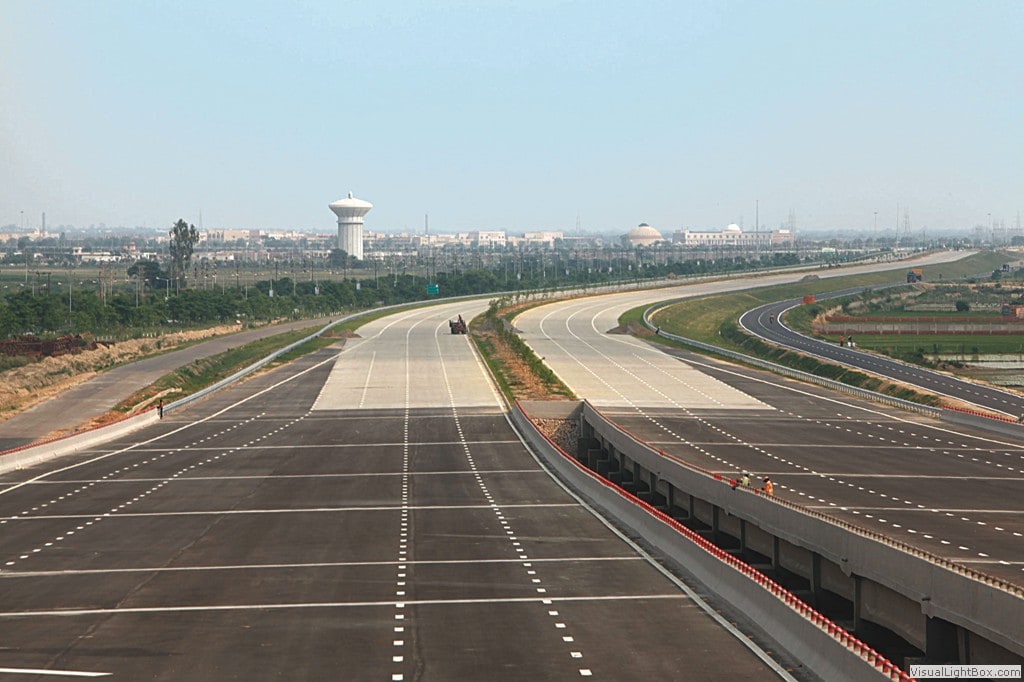
The distance between the two cities has reduced significantly with the opening of the Yamuna Expressway. The expressway is generally free from traffic but according to rules, one cannot exceed his speed limit beyond 100 kmph.
The journey is more comfortable in August than the rest of the months as the sky tends to be cloudy which provides protection from the heat of the sun. The distance of 200 km from Delhi to Agra on this expressway can be completed within three hours.
Agra is a city situated on the banks of the Yamuna in Uttar Pradesh, India. The city has a rich historical background which is evident from the number of monuments in the city. The earliest reference to Agra dates back to the period of Mahabharata where it is referred to as Agravana.
It is also believed that the place served as an abode of the Aryans. The city offers one a memorable experience which can be felt only when one visits the place. To explore this place is to be transported to the time when the city was ruled by the Mughals.
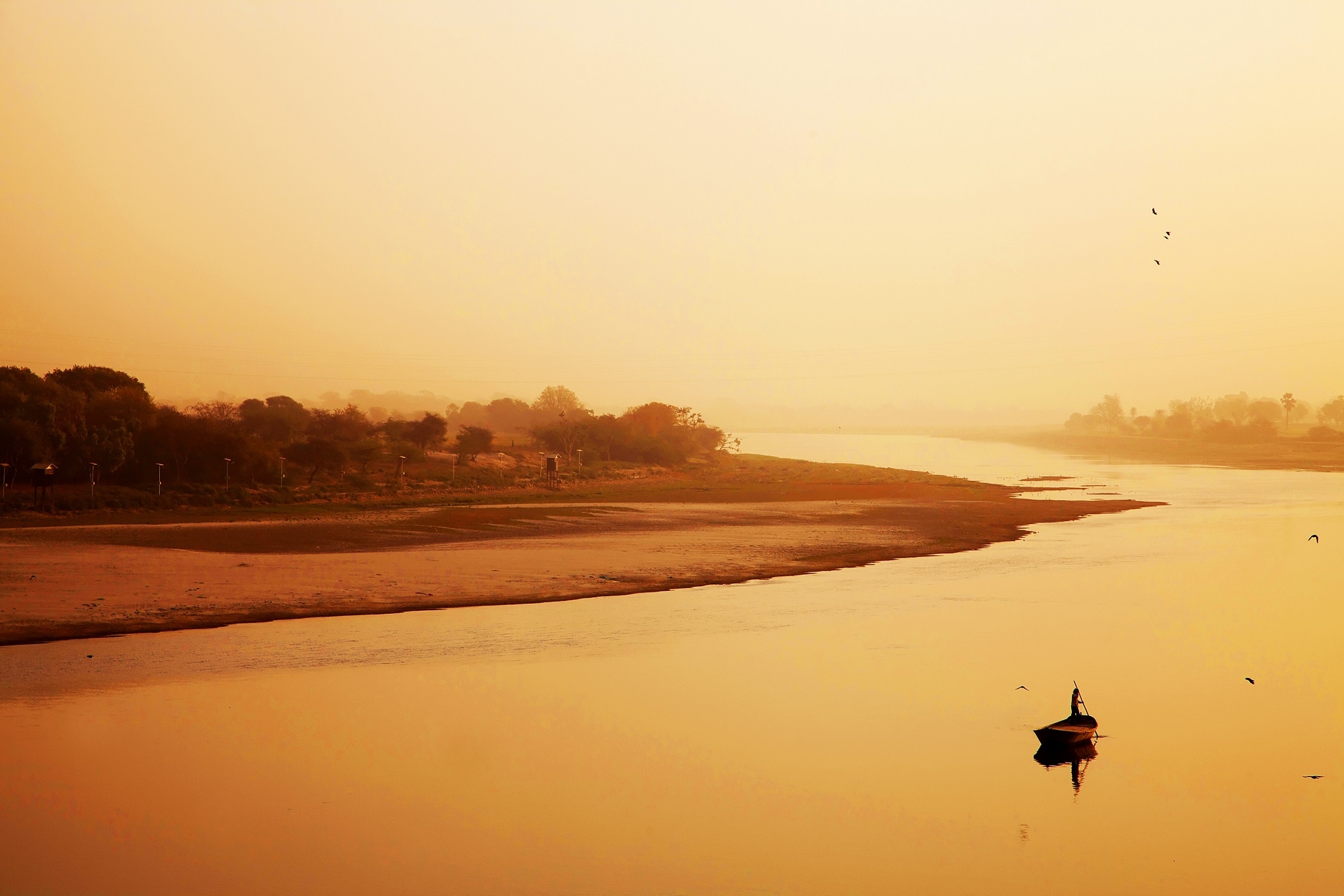
A man rowing a boat in the holy Yamuna River near Taj Mahal
Agra is one of the most visited tourist destinations of India so by virtue of that one can visit anytime of the year here and still find a number of fellow visitors. People come here to experience the beauty of Agra’s monuments, its food and to purchase leather footwear.
But we were not so bothered by thoughts of the tourist rush as we had already booked an OYO in Agra located on the Agra-Fatehabad Road, barely a few hundred meters from the Taj Mahal.
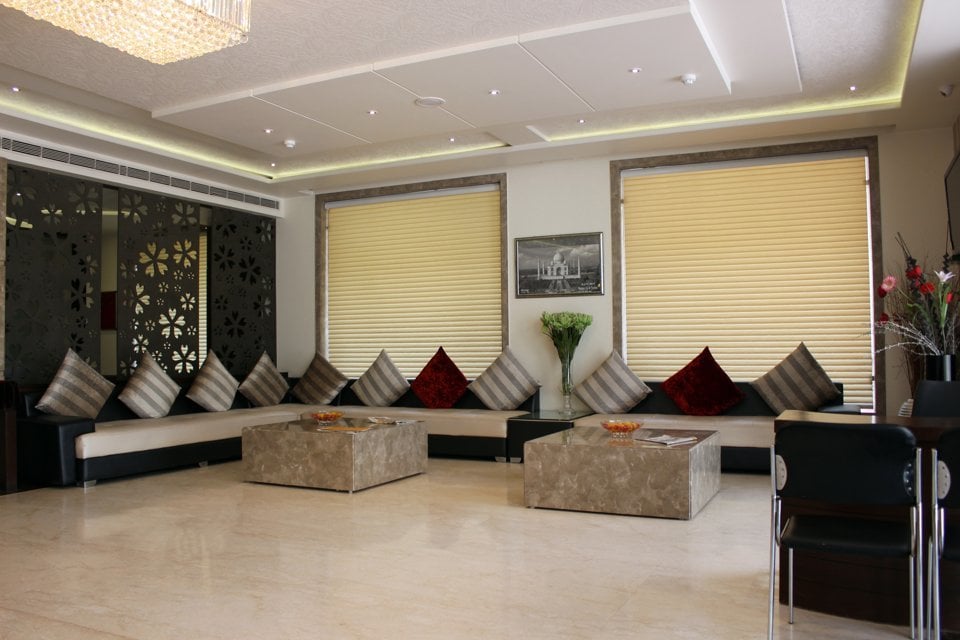
OYO Premium TDI Mall Fatehabad Road- Lobby
We checked in to the hotel and were happy to see the arrangement and the maintenance of the rooms. After checking in and taking lunch we headed towards Mehtab Bagh. It took us thirty minutes to reach Mehtab Bagh given the current state of the city’s traffic.
Mehtab Bagh or ‘The Moonlight Garden’ was the eleventh Mughal-built garden along Yamuna River opposite Taj Mahal and Agra Fort. The place provides a beautiful view of the Taj Mahal.
It is believed that Shah Jahan wanted to build a black marble mausoleum for himself as a twin monument to Taj Mahal in this place. But his wish could not be fulfilled as he was imprisoned by his son Aurangzeb. A researcher while discovering the remnants of an old pond mistakenly found the foundation of the prestigious structure.
Another popular belief is that Mehtab Bagh and other gardens were constructed to protect Taj from the corrosive effects of the sand blown across the river. The site is open for visit from sunrise to sunset with an entrance fee of Rs 5 for the citizens of India and SAARC and BIMSTEC countries’ visitors and Rs 100 for people not falling in the above categories.
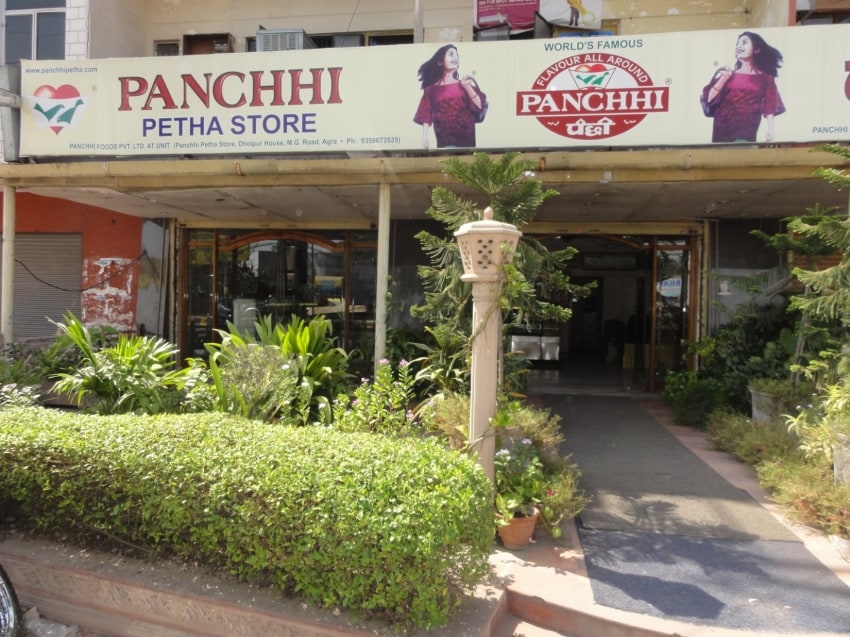
On our way we met two housewives who went there regularly with their children. We asked them what could be the other places to visit apart from the Taj Mahal, and they suggested that we could visit Sadar Bazaar and taste the sweet that Agra is famous for, the petha. They showed us the way to the original Panchhi Petha shop which is popular among the locals and the tourists. Panchhi Petha is a small shop with no fancy banners and decorative packages and its a must in agra shopping TO-DO list. They serve a variety of pethas and also enjoy a loyal customer base.
We headed back to the hotel to meet our guests- the founders of Street of India – who were organizing a photo trip in Agra. They had had a pleasant bus trip from Delhi to Agra. They along with a group of twenty young photographers planned to cover the city’s heritage in a span of two days. The photo walk was to start with one of the Seven Wonders of the World, the Taj Mahal.
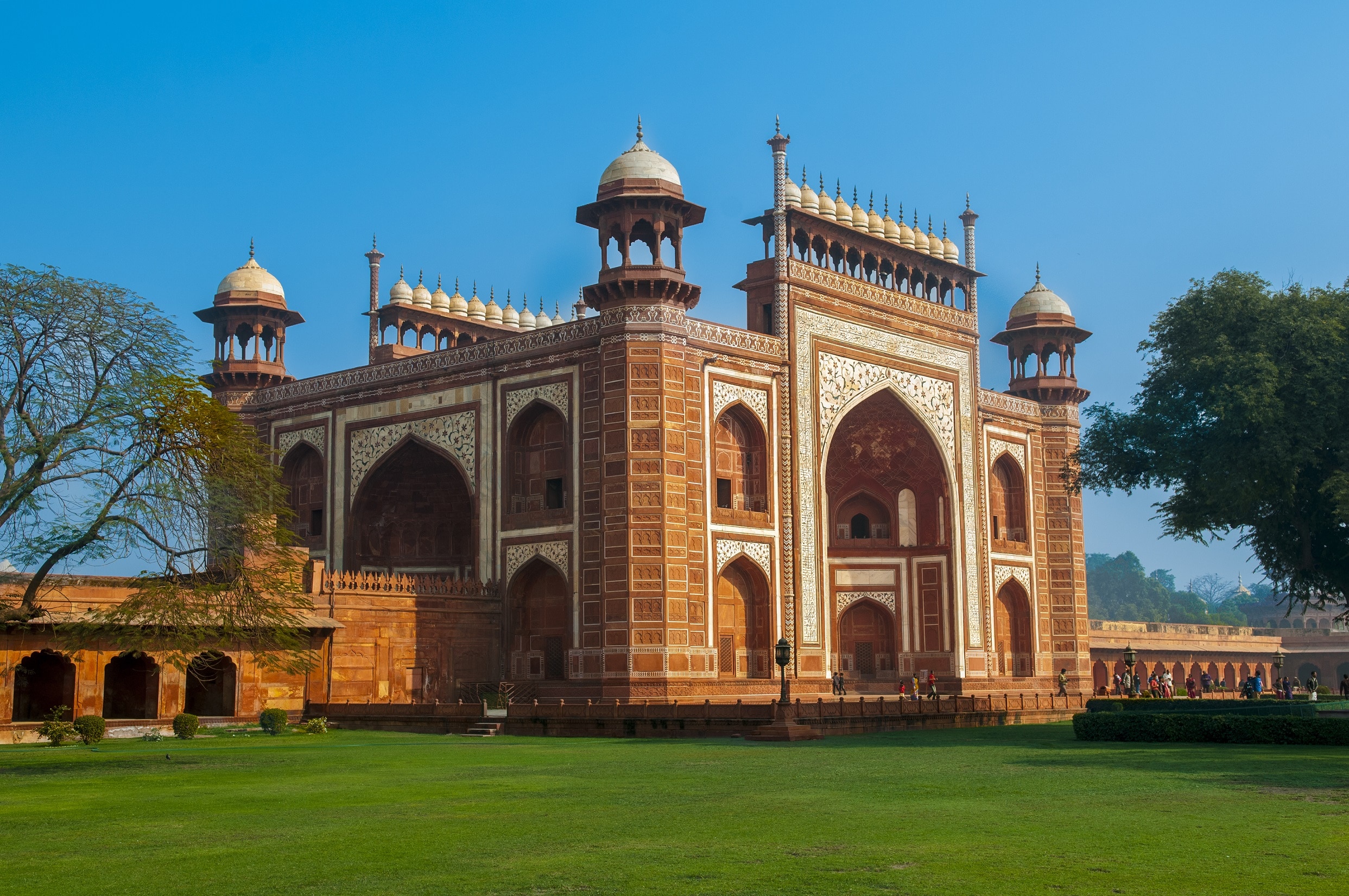
Taj has a beautiful entrance. It is an ornately designed structure and a treat to visitors and photographers. It took us thirty minutes to cross the entrance to catch hold of the white marble beauty.
Taj Mahal is believed to be built by Shah Jahan in the memory of his beloved wife Mumtaz Mahal. It is symbol of love and a world heritage site. The domed marble tomb is a part of an integrated complex of gardens and two red-sandstone buildings.
Entrance to Taj- Intricate carving and paintings would keep one mesmerized before finally catching hold of the first sight of Taj Mahal
Taj Mahal is something difficult to describe in words, one would always fall short of words while describing it. As it was an early morning visit there were less visitors and more photographers. The team had taken photographs from each and every angle to capture the moment.
The Taj Mahal is open for visitors from 6 in the morning to 6 in the evening with an entrance fee of Rs 20 and it also hosts a light show which starts from 7:30 and 8:30 in the evening.
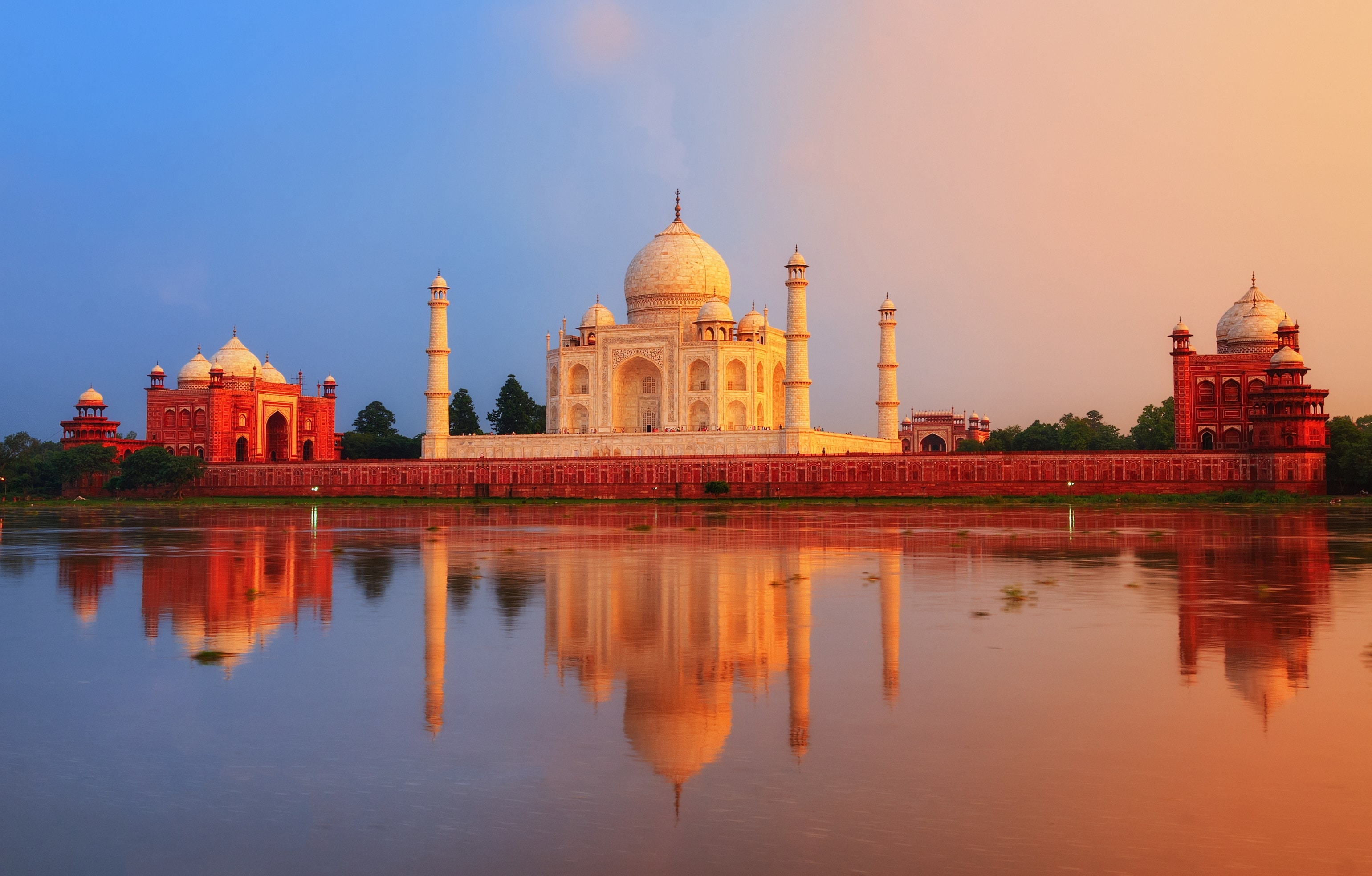
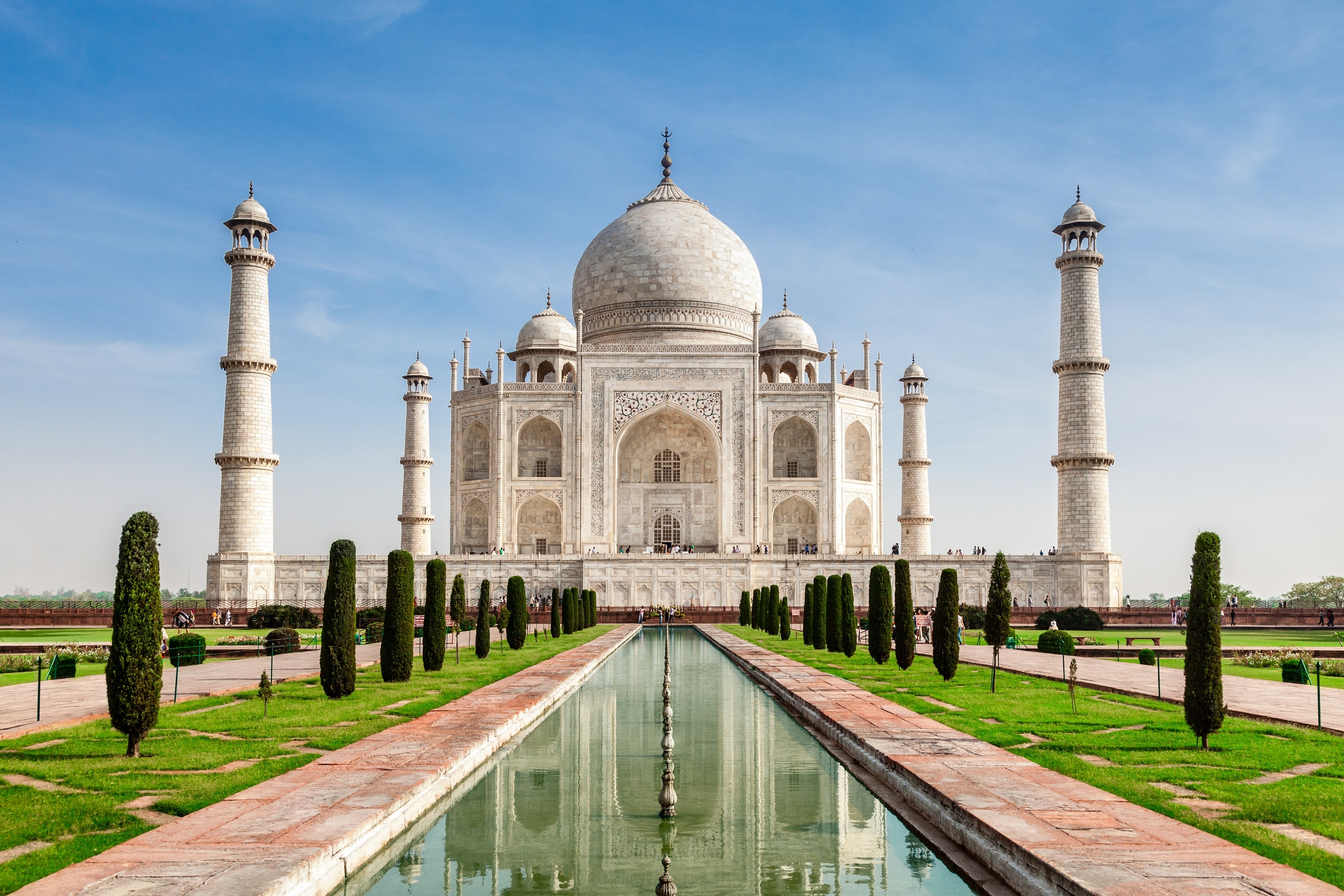
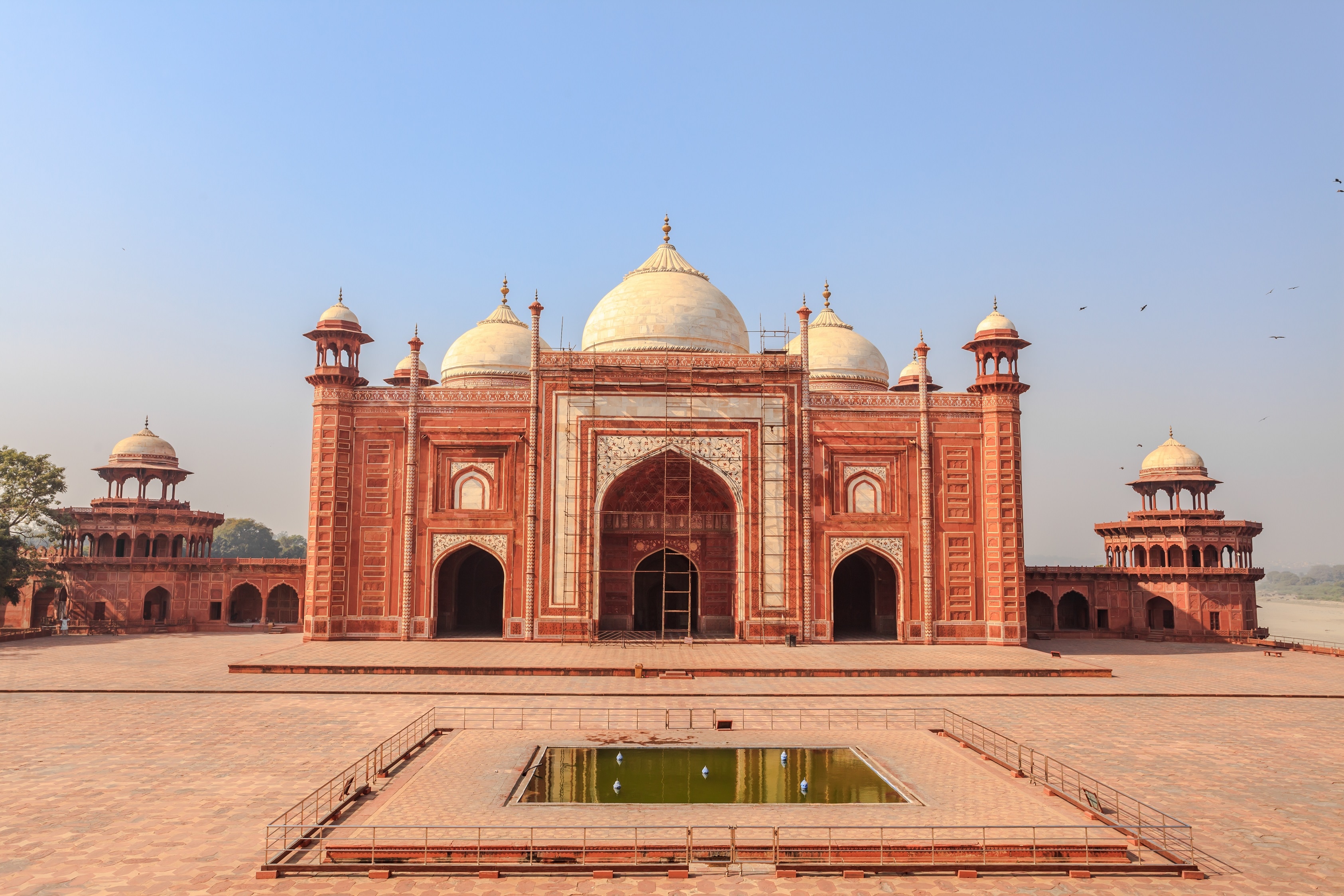
Evening view of the Taj MahalThe white marble beauty- Taj MahalTaj Mahal Mosque
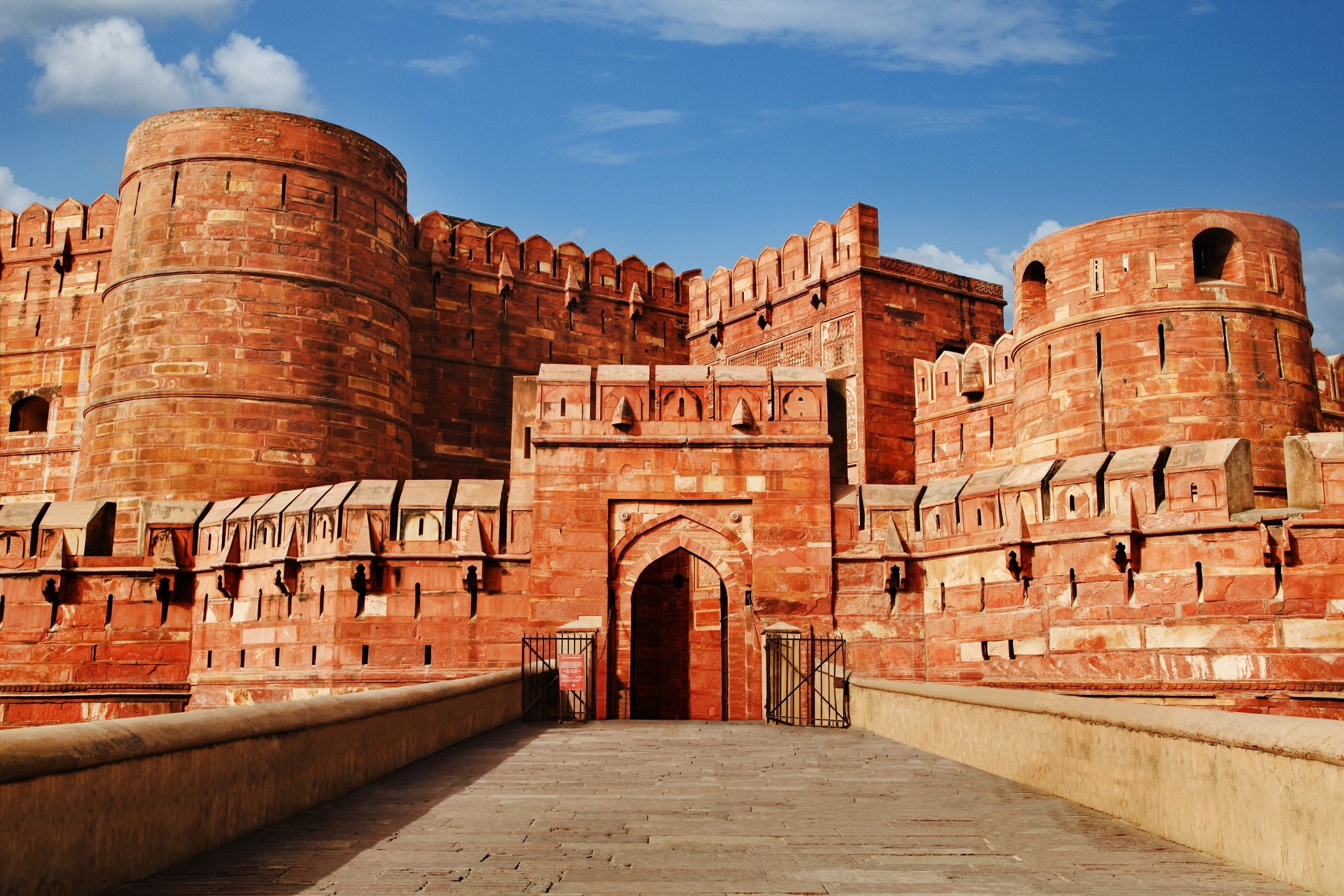
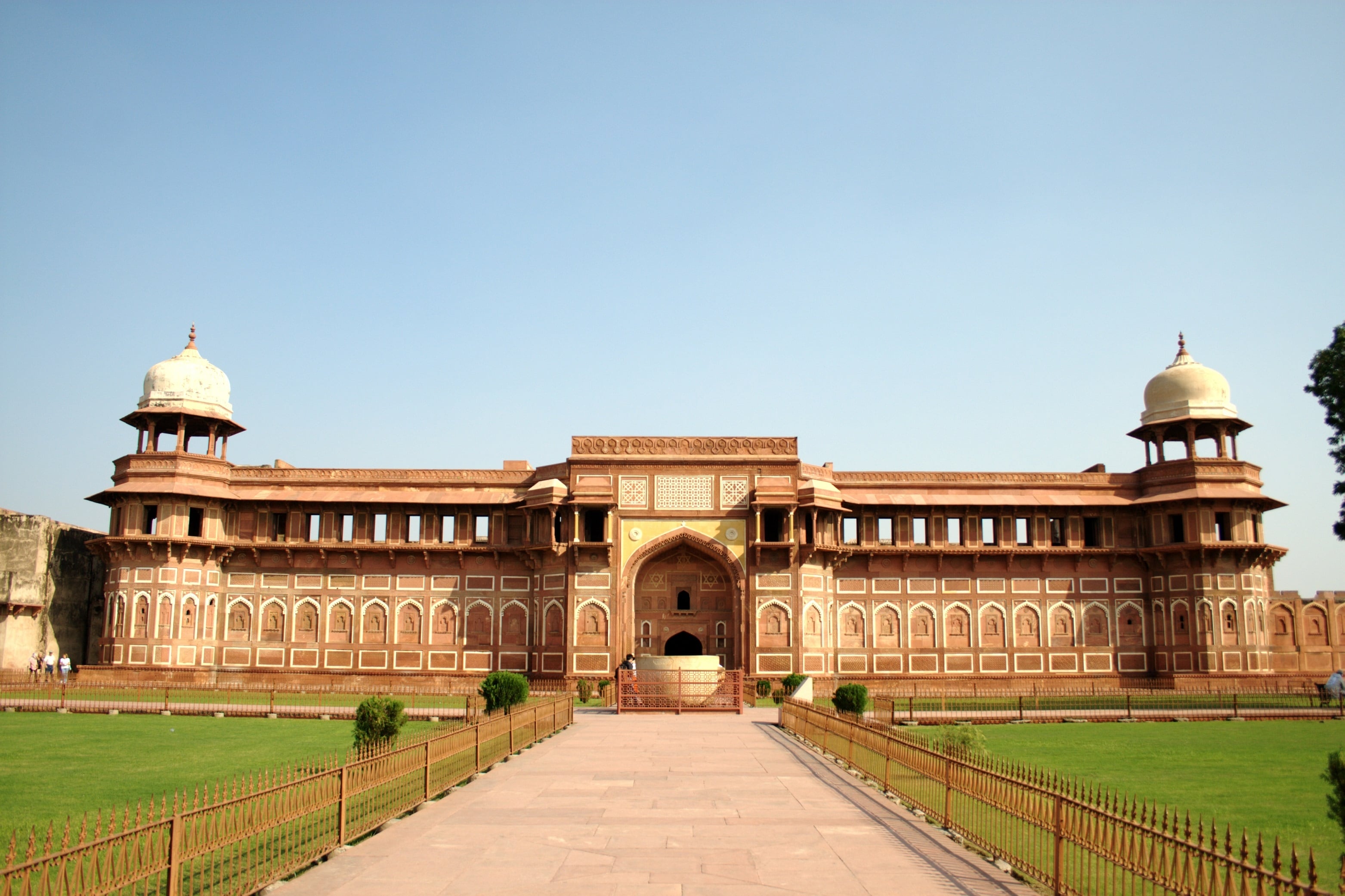
Having seen the Taj Mahal it was time to visit the Agra Fort. Like the Taj Mahal, the Agra Fort is also a UNESCO World Heritage Site and is popularly known as the sister monument of Taj. The fort is also known as ‘Lal-Qila’ and is a symbol of power, strength, and pliability.
Emperor Akbar built the fort in red sandstone in 1654. The Fort served as a military strategic point and as a royal residence. The fort is open for a visit on all days with an entrance fee of Rs 20 for Indians and Rs 520 for foreigners.
The entrance to Agra Fort- it served as a protection to the royal residence of AkbarThe entrance to the royal residence of Akbar, Agra Fort
Finally, after a tiring day, we put an end to our journey. We bid adieu to the historical city and proceeded towards Delhi from Agra.
The city has given us a lot of memories and reminded us of our rich history. The walls, architecture, style, food, and people all tell us something related to our history-making us proud of the place we belong to. Such diversity in culture, food, clothes, and architecture can only be found in India. If you have more holidays in your kitty, you can plan one day visit Kanpur
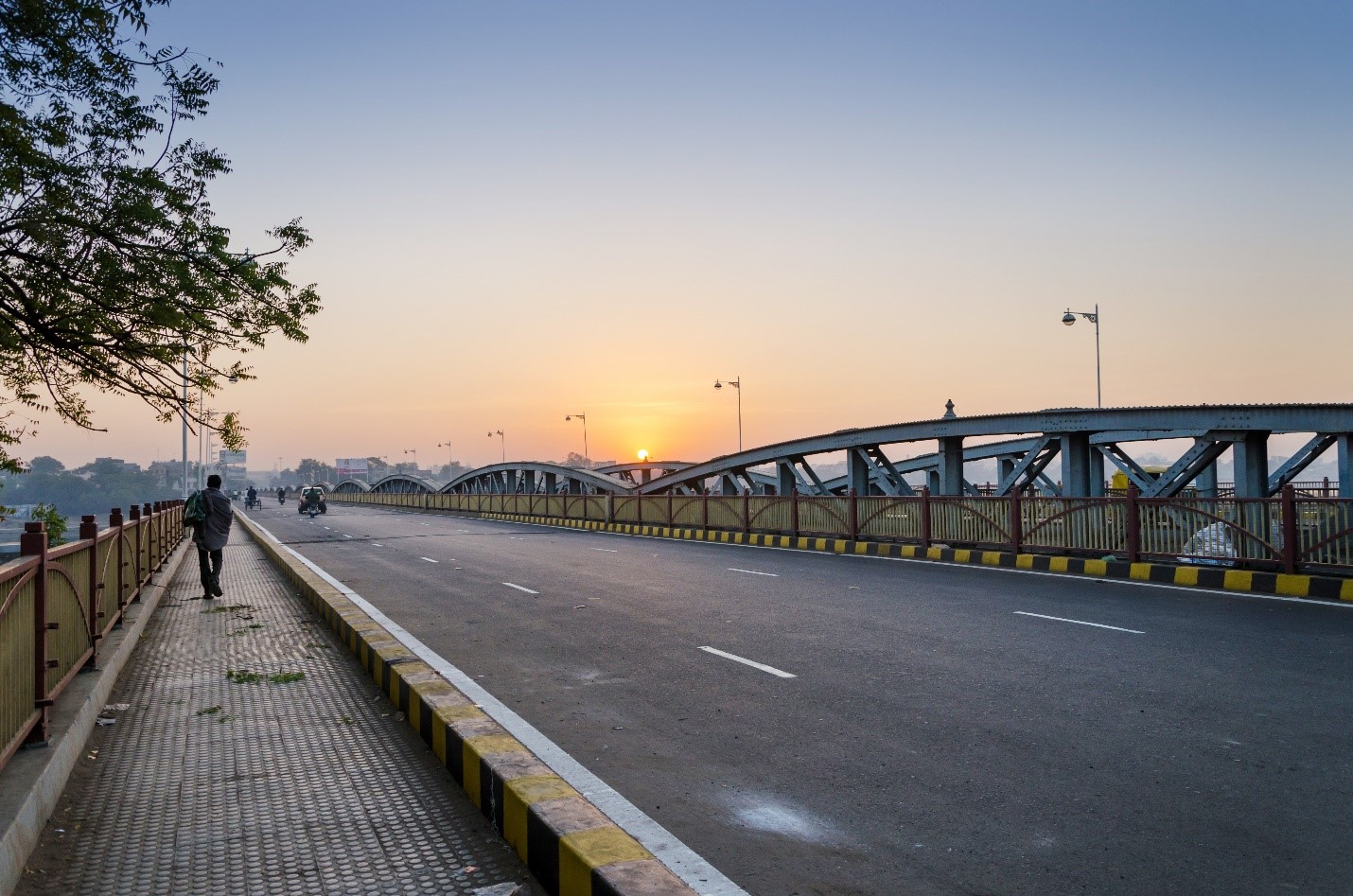
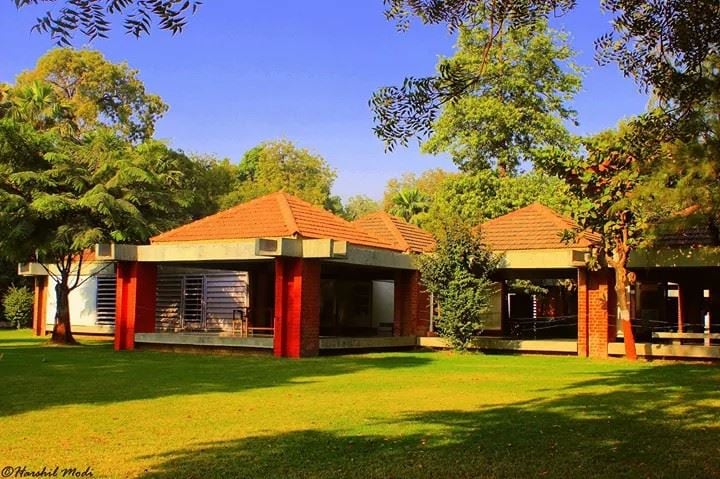
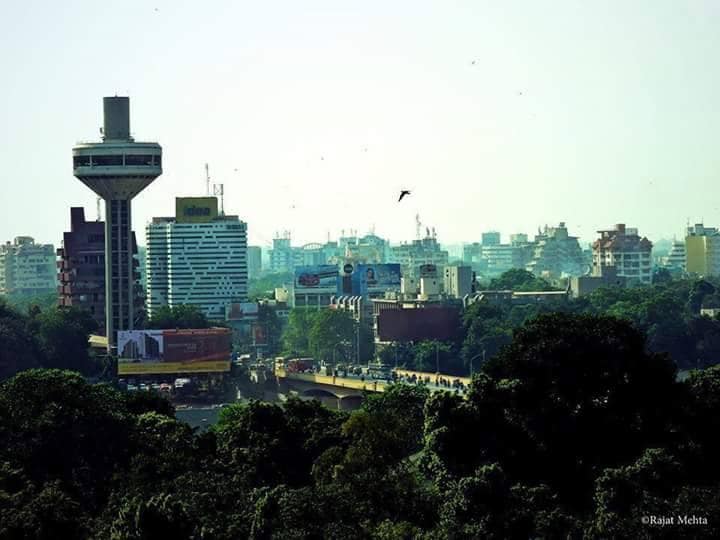
Ahmedabad is colorful, full of lights, and has a rich heritage. It was the capital of Gujarat until the establishment of Gandhinagar, though a lot of people still believe the former to be the capital. The city has seven bridges which connect the historic city to the modern or the commercial part of the city. It is known for its handicrafts, theme-based restaurants and traditional cuisine. We bring you some of the attractions of the city and a list of must-dos.
Ellis Bridge- a century old heritage bridge of Ahmedabad
Places to visit
The monuments here are a photographer’s delight as they are well-maintained and kept clean.
Bhadra Fort
The fort was constructed in 1411 AD during the reign of the Marathas. It has a special mention in the history of Ahmedabad as it was established by the founder of Ahmedabad, Sultan Ahmad Shah. The fort houses a beautiful palace with decorated arches and balconies. The fort houses the Bhadrakali temple a temple devoted to Goddess Laxmi. It was constructed during the rule of Aazam Khan. The place today has a lush green garden and often serves as a place for flag hoisting on Independence Day. The place has many stories associated with it, one of which relates to manner in which the city was named.
Once Ahmad Shah and his men were marching westwards to conquer new kingdoms. The scorching heat and continuous battles left them exhausted. On one such long and tiring day he and his men halted at Sabarmati River to take rest. There he caught hold of a very astonishing sight- a rabbit chasing a dog. The king was very impressed by the bravery of the rabbit and went on to conquer the city which came to be known as the ‘City of Ahmad’ and later Ahmedabad.
Dada Hari Ni Vav
Dada Hari Ni Vav is a magnificently designed stepwell. It was constructed during the reign of Mahmud Begada in 1501 AD. It is an octagonal stepwell decorated with authentic Gujarati designs. The elaborate stepwell has spiral staircases descending to different platform levels. It is a five stories deep stepwell built of sandstone in Solanki architectural style. The temperature inside the stepwell is five degrees less than the outside temperature making the place cool and a must visit in summers.
Teen Darwaza
Teen Darwaza is the oldest gateway of the city. It was built by Sultan Ahmed Shah in 141 AD. Teen Darwaza is close to Bhadra Fort. It is one of the finest examples Indo-Islamic architectural designs. The monument is associated closely with historical and legendary events.
The gateway has three arches which lead to a large compound forming the courtyard of the palace called Maidan Shah. It also has many legendary stories associated with it. Currently, the place is popularly known for its roadside market known as Teen Darwaza market. It is bustling with shoppers both local and outsiders all day long. Here one can find traditional Gujarati design dresses, jewelry and footwear. During festivals the area is busier than the other days.
Sarkhej Roza
Sarkhej Roza is a mosque and tomb situated in Makaraba, 7 km south-west of Ahmedabad. It served as a home to Sultan Ahmed Shah. The place also has a mausoleum and a mosque which were built in 1451 AD. Although there are many rozas across the country Sarkhej is the most prominent. Like other monuments built during that period Sarkhej Roza combines both Hindu and Muslim elements of architecture. The domes and pillars follow Islamic principles of architecture while the motifs and ornamentation follow Hindu and Jain design elements making it a perfect example ‘Indo-Saracenic’ architecture.
Sarkhej Roza
Sabarmati Ashram
Sabarmati Ashram was set up in 1915. It is believed to be the central point from where the struggle for Independence started. Till the year 1930 the ashram also served as Mahatma Gandhi’s abode. Today the ashram houses a library, museum, a picture gallery and an auditorium. The ashram gives one a sneak peek into the life of Mahatma Gandhi. The museum contains manuscript of his articles, films on his life and a picture gallery of India’s freedom struggle.
The ashram is located near Sabarmati River and is open from 8:30 in the morning to 6 in the evening. The ashram provides peace and an escape from the mad rush of the city.
The state celebrates all festivals with enthusiasm and vigor.
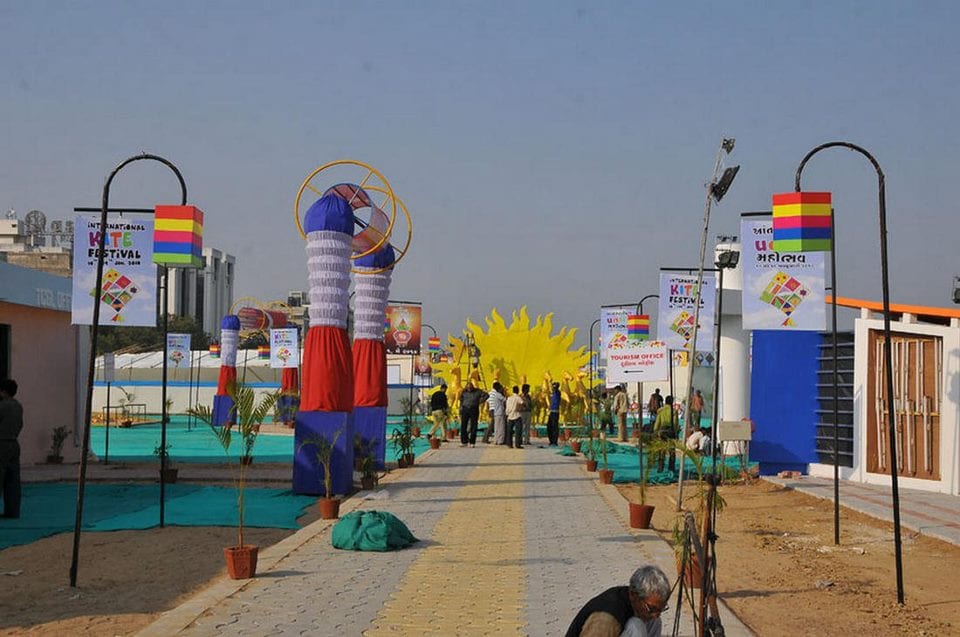
Uttarayan: Festival of Kites
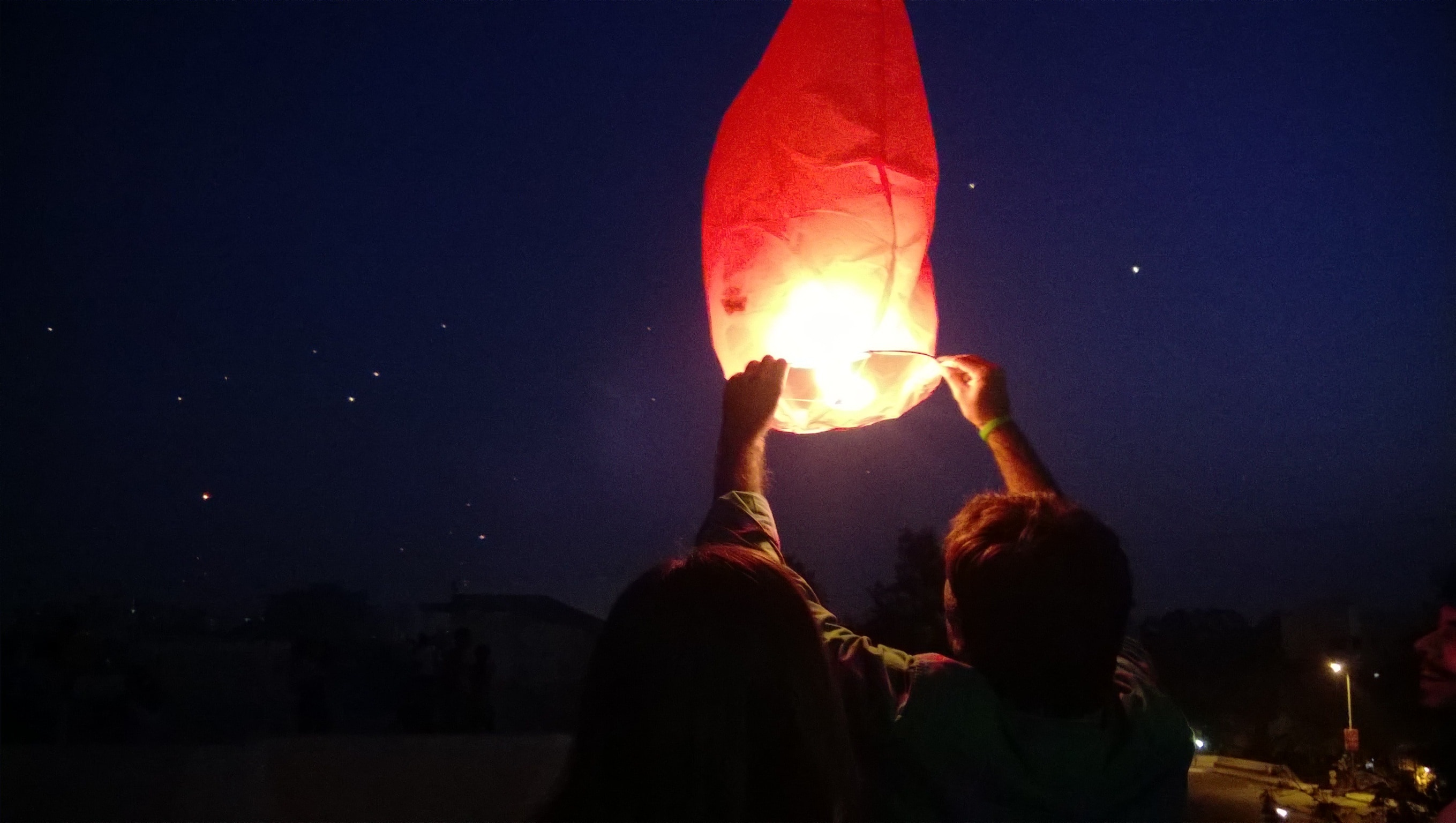
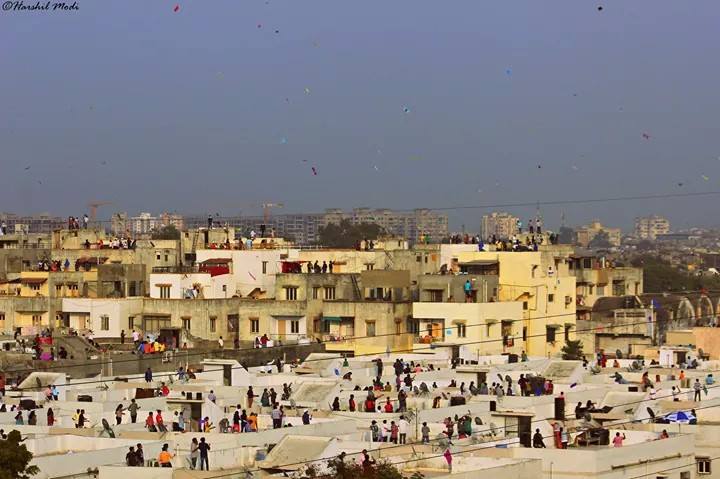
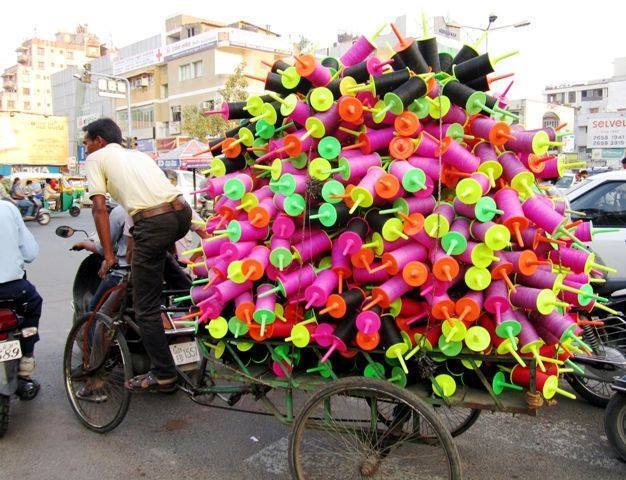
Uttarayan or Makar Sankranti is celebrated here like the rest of India but the energy with which it is celebrated makes it a lot different. During the festival, shops and streets are full of a variety of kites and manjhas, giving the city a vibrant and colorful look. The day is colorful and the night is beautifully lit with tukals, lighting the entire city. Undhiyun a mixed vegetable dish is a specialty of Uttarayan.
Patang Mahotsav or International Kite Festival is celebrated at Sabarmati River front where people from across the world would participate. The festival has become a popular tourist attraction. The festival is also celebrated the following day and is known as Vansi Uttarayan. This would be an ideal time to visit the city to experience the enthusiasm and vibrancies of the city.
The city all set for Uttarayan- a much awaited festival
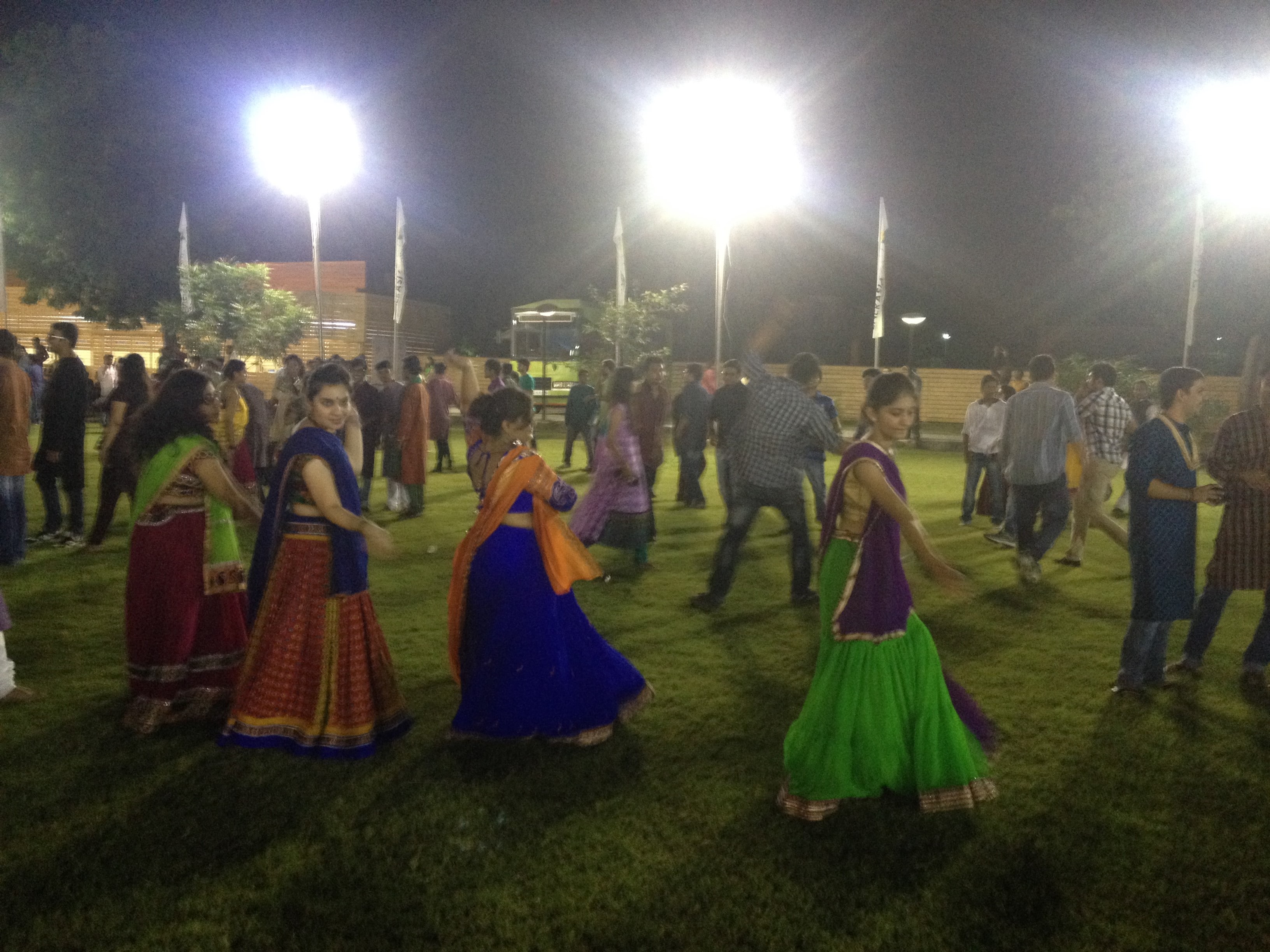
Navratri is one of the most popular festivals among the Hindus and for the Guajarati’s it is a way of showing their devotion to Goddess Shakti. This devotion is depicted in their dance form known as dandiya and ras garba performed during these nine days.
Garba night in a college campus
The festival has a special significance among the women of the Gujarati households, it is time for them to shop for traditional lehenga-choli, white metal jewelry, mojris, bandhani sarees and many more things. The females usually fast during this time in the honor of the goddess. The eighth day, known as Ashtami is the day of Maha aarti and is considered to be the most important day of the festival. The garba is performed in societies, hotels and other party spaces. The city is usually lit till two in the morning during these days.
Shopper’s Street
No travel is complete without taking home the specialties of the place. Be it in the form of a remembrance or a souvenir for a friend or family member. Clothes, footwear, handicrafts are all a shopper’s delight.
Law Garden Handicraft Market
A market selling the traditional wares from Saurashtra and Kutch. The vendors sell decorated cholis and lehengas, embroidered blouses, embroidered handicrafts, jewelry, bags, purses and many more such things. Asopalav, a high-end store for sarees is located in this place. The store is popular among the locals and a shopping place for newlyweds and to-be-married women.
Lal Darwaja
Lal Darwaja is the most popular and busy shopping place in ahmedabad. The market offers men and women apparel, footwear, traditional lehengas etc. all at great prices.
Dhalgarwad
One can get all the things here from clothes, jewelry to handicrafts. However, one should beware of counterfeit products. The daily need items are available at reasonable prices here.
CG Road
CG Road is a place for modern shoppers. It is the costliest retail location of the city. The place has malls like Iscon Mall, Super Mall and other high-end stores like Woodland, Nike, Puma, Rado, etc. The place offers a different shopping experience to its shoppers with its high-end stores.
Food: Sweet and Spicy
From restaurants to street foods Ahmedabad is famous for all. It offers you many theme-based restaurants, a traditional taste and a flavor one would remember for lifetime.
Manek Chowk
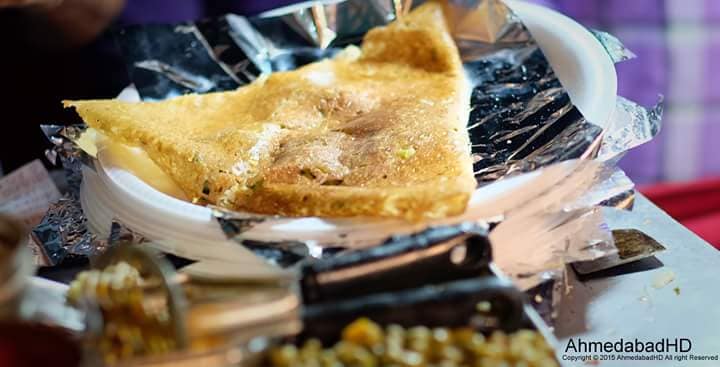
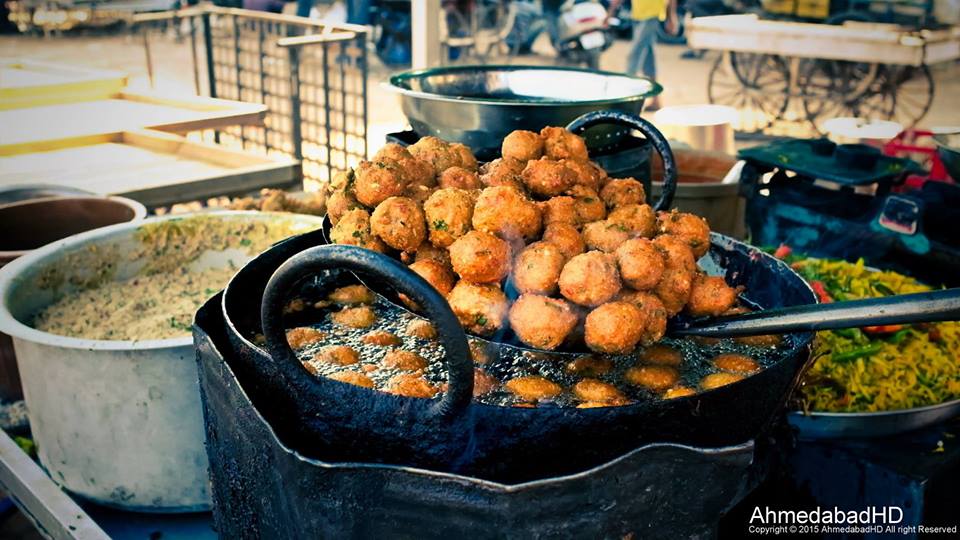
Manek Chowk is a notable place in Old Ahmedabad. In the morning the place is a vegetable market, jewelry shops open up during the day time and at nights the place turns into street food market. The place offers Kulfis, Bhaji Pav, Masala Dosa, etc. Specialties of the place are chocolate and pineapple sandwiches.
Restaurants like Vishala, Rajwadu and Patang hotels offer a unique experience. Vishala is a village-like theme restaurant which serves the traditional Gujarati thali on a leaf, with a seating arrangement on the floor. The meal is usually accompanied by folk dance, music and puppet shows. One can also buy jewelry and other things from here. Rajwadu is a similar theme-based restaurant. Patang is a revolving hotel located 200 feet above the ground level.
One could indulge in the street food available opposite IIM-Ahmedabad’s campus. Here tea is available at `5 in the morning along with other snacks. Dalwada is a popular snack among the locals.
Apart from the above mentioned places one can go to IIM-A food festival, Seva Café that is run by volunteers and where the guest donates some amount to pay for the next customer’s meal. Dabeli, Gola-Ice Candy are other popular foods here.
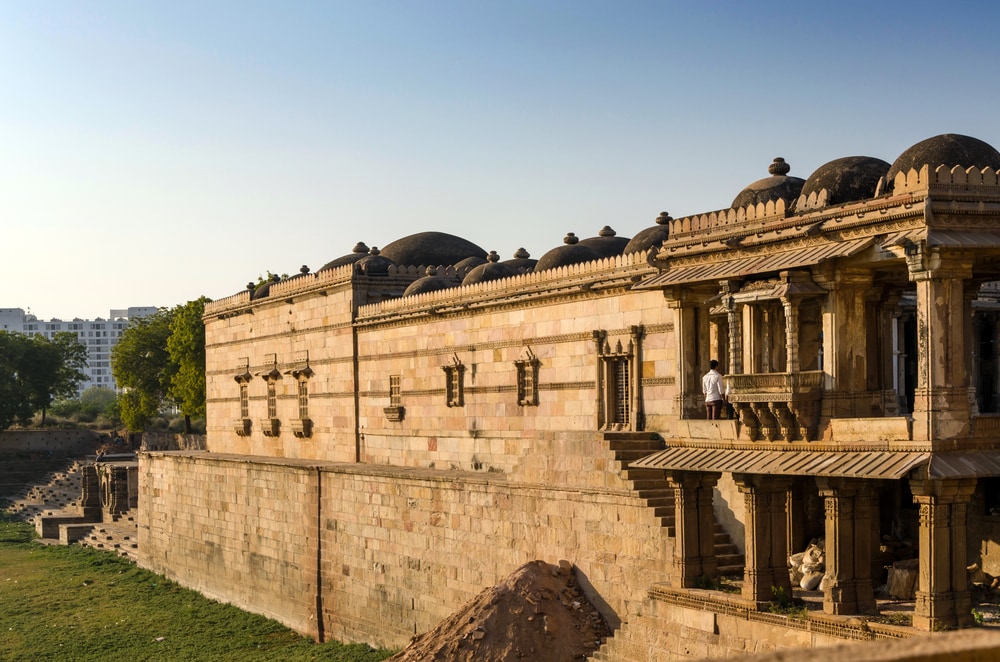
It is one of the oldest mosques here. It was constructed in 1414 AD and is known for its magnificent architectural design. It is located close to the Bhadra Fort and is visited by many tourists throughout the year.
Swaminarayan Temple
The temple is dedicated to Lord Swaminarayan and is known for its wooden carvings.
The other places of worship include the Jama Masjid, Sidi Sayed Mosque, Hathee Singh Temple and others. A few minutes’ drive from Ahmedabad would lead you to Akshardham Temple in Gandhinagar.
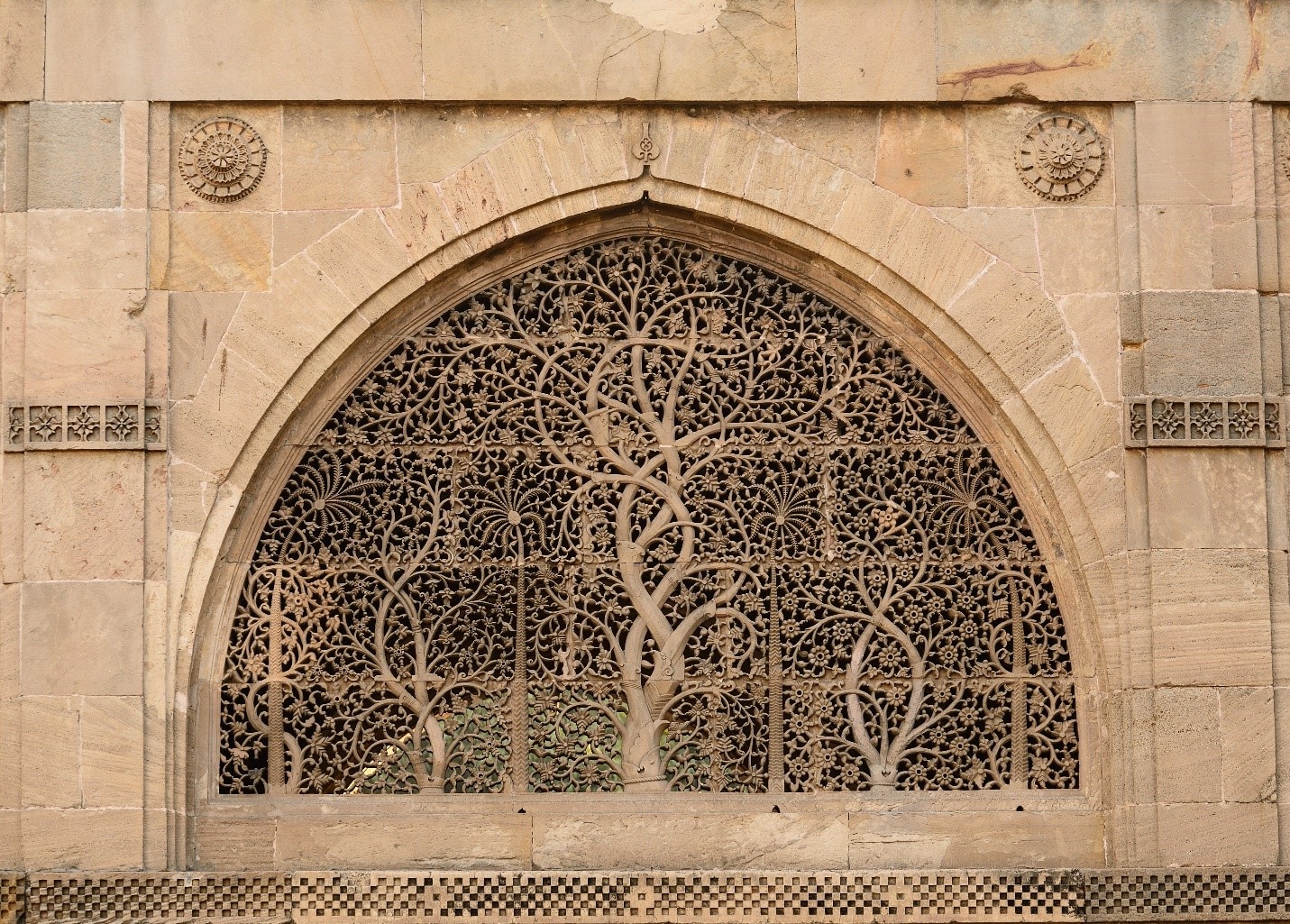
An intricately carved window in Sidi Saiyyed Mosque- the Sidi Saiyyed Jali, a symbol of the city and an inspiration for IIM-A’s logo
A few other must do things in Ahmedabad
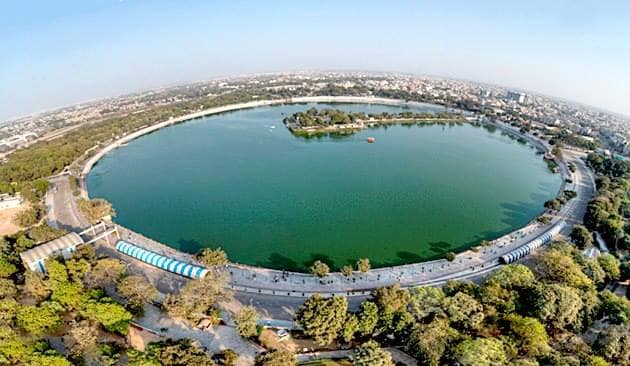
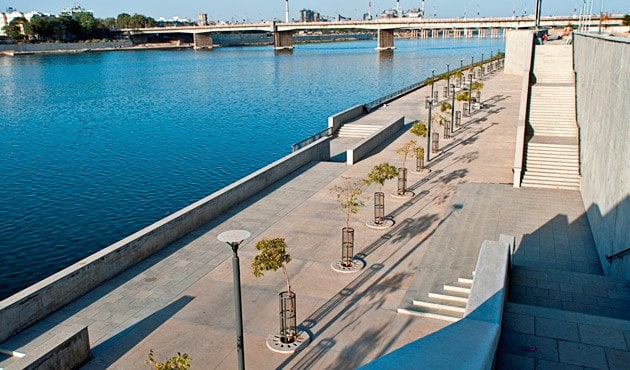
Ahmedabad has a lot of parks, zoos and lakes which bring people closer to Mother Nature. Kankaria Lake is a must visit place. It hosts an annual festival and has an amusement park nearby. Sabarmati Riverfront is another place where one can go in morning to enjoy the sunrise and during evenings to enjoy the sunset. Early morning is the perfect time to visit this place.
Now that you know that Ahmedabad is such a beautiful city, plan a visit to this city for an amazing experience. December & January are the best time to visit Ahmedabad. This place also offers number of affordable hotel options. A few of the options are available here.
Old Delhi has seen better days, but a journey through its narrow and crowded bylanes still excites the pure-bred explorer. We went on such a journey and were not disappointed at all.
Even in today’s modern and fast-paced times, the history of this place has remained intact. But we will leave the history of the place for another post and focus only on the present-day attractions of this area.
Exploring Chandni Chowk
We begin our journey from the T-point that connects Netaji Subhash Road and Chandni Chowk Road, with the Red Fort right across the crossing. Chandni Chowk Road is basically a narrow two-way street that stretches from Lahori Gate of the Red Fort to the Fatehpuri Masjid and the best time to visit delhi is from October to March. Especially summers are scorching high touching almost 45-47 C during daytime.
There are a number of places worth visiting cramped in a small area that spans a few miles at most. The first such place was right at the point where we started.
This is the best known and oldest Jain temple in India built with red sandstone. The temple houses the statues of Mahavira, Adinath, and Parasnath, three of the most revered icons in Jainism. The shrine area inside the temple is beautiful and ornate with gilded paintwork and light from lamps and candles. Visitors can enter during the morning and evening hours only.
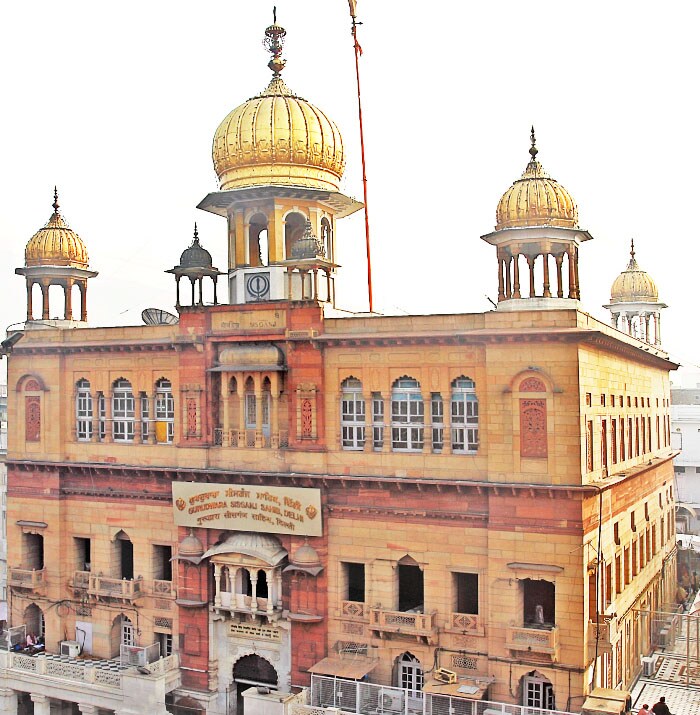
Barely a few hundred meters away from the Jain temple is another place of worship, Gurdwara Sis Ganj Sahib which is one of the nine historical Gurdwaras of Delhi built to mark the site of the beheading of the ninth Sikh guru. Guru Tegh Bahadur.
The complex even has a replica of a well from which the Guru is said to have drunk water. Visitors will surely find this to be a deeply peaceful and spiritual place amidst the hustle and bustle of the old city. And the delicious halwa served as prasad and the langar, both served free of cost, are an added bonus!
Best Food Places In Chandni Chowk
A visit to Chandni Chowk is incomplete without tasting the delicious trademark food served here. While there are many amazing places to eat here, we stick to the three most popular ones.
1. Ghantewala Sweets
Barely eighty meters from the Gurdwara stands one of the oldest sweet shops of Delhi, Ghantewala Sweets. The name of the place originates from the presence of a huge bell-tower right next to the shop. Legend has it that the sweets of this shop could weaken even the most hardened soldier’s will to fight.
The Sohan Halwa of this shop was and continues to be its most sought-after product even two hundred years later.
2. Natraj Dahi Bhalle Wala
Do not be surprised if a blog about Old Delhi has so many eateries listed. Natraj Dahi Bhalle Wala is legendary in its own way.
While the taste may not be truly unique, the serpentine queue that lines up outside the tiny corner shop waiting to be served the delicious chaat bears ample testimony to the popularity of this humble outlet.
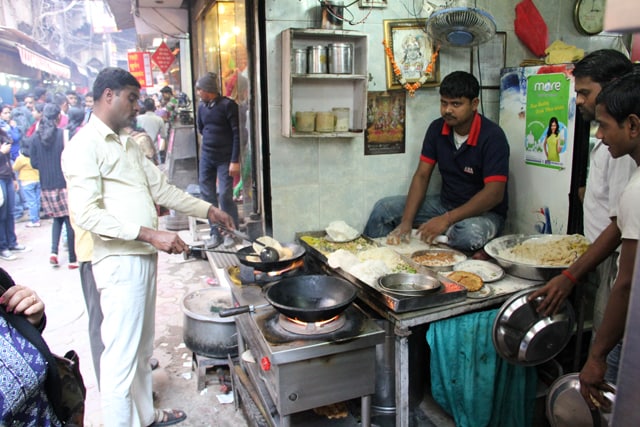
Turn left and walk through the labyrinthine alleys and you would arrive in the famed Paranthe Wali Gali. Of the original 20 odd shops that existed in the 1960s, only 3 remain today. Nevertheless, the variety and taste would not let you miss anything. Famous people including many former Prime Ministers have dined at the shops in this lane.
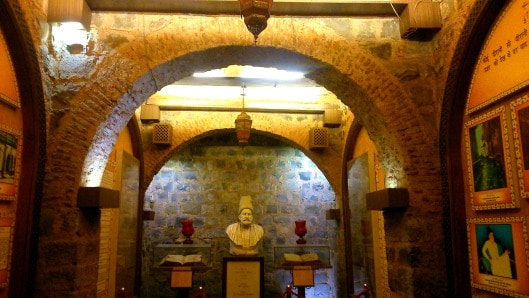
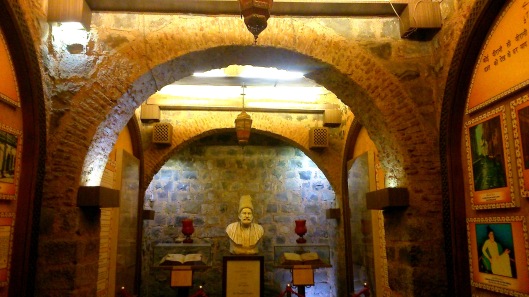
About a kilometer away from Parathe Wali Gali stands an old and dilapidated but recently renovated building that was once the home of renowned poet Urdu Mirza Ghalib. Now declared a heritage site by the ASI, this haveli in Ballimaran is now open to the public who can visit it for free.
The walls are adorned with a huge portrait of the poet and his couplets are hung around the side walls. It also houses many handwritten poems and a life-size replica of the poet in a realistic setting with a hookah in his hand.
Shopping Destinations in Chandni Chowk
Shopping in Chandni Chowk is a one of a kind experience and there is hardly anything that you will not find here. Clothes, books, household knickknacks, bags, shoes and electronics- name it and you are going to find it here.
If you are a book lover, or student looking for stationery items, you have to head towards Nai Sadak. You will find a wide range of fiction and non- fiction books as well as books for competitive exams from here.
On the other hand, if it is junk jewelry and costume jewelry that you are looking for, then head to Dariba Kalan. This region has some of the best shops in the city to sell handmade jewelry and the meenakari and the kundan jewelry found here are to die for. You will also get shops selling perfumes and ittar.
Chawri Bazar should be your destination for printing wedding cards in bulk, along with any other paper products that you may want. And for the actual wedding shopping, you should head towards Kinari Bazar. This narrow lane is the go to place for buying high quality lace and zardosi.
If it is electronic items you are looking for, then you should head towards Bhagirath Palace. From gadgets to light fixtures, you will get everything for your family from here.
For accessories like shoes and sunglasses, you should visit Ballimaran market and you will get them at the most affordable prices here.
Then of course, you can head towards Khari Baoli for spices, herbs, nuts and dried fruits. Fatehpuri Market is known for its eateries and you will find the best paneer and khoya in the city here. If you are a photographer looking for good deals on camera and lenses, then you have to head towards Kucha Choudhary market. Head towards Katra Neel for buying fabrics and clothes at wholesale prices. Moti Bazar is the place to be in, for buying high quality wool, but the market gets its name for the pearl shops that specialize in selling pearls of every kind.
Food at Chandni Chowk
If you want to enjoy the street food in Delhi, then there is no better place to experience it than Chandni Chowk. Some of the restaurants here are fifty to hundred years old, and have seen a lot of India’s past, since the pre- independence. People still come from far and wide to their favorite childhood joints, even though they might have moved away later.
The main streets here are the Paranthewali Gali and the kebab joints near Jama Masjid. The former has even been visited by many celebrities and the street gets its name from the paratha shops, which sell steaming parathas with dollops of butter. However, from the earlier 20 shops, only three remain functioning till now. All the paratha shops here are vegetarian, and there is no onion or garlic used in them. The stuffed paratha are to die for, potato, radish, carrot, cauliflower, paneer and many other kinds of fillings are used for them, and are served with an assortment of chutneys and pickles, with papads. The shops remain open from 9 am to 11 pm. The food here is in expensive and you can easily have parathas for two people in a mere INR 150!
Tea and paan shops selling authentic Benarasi paan are seen everywhere. Do not forget to try out the Dahi Bhalle from Natraj’s; Gianiji ka Falooda, and the jalebis from the streetside shops. Reputed confectioners like Tewari and Bhikharam also have their shops here.
History of Chandni Chowk
It is said that the foundations of Chandni Chowk were laid during the Mughal era, under the reign of Emperor Shah Jahan. Chandni Chowk was supposed to be the central square of Shahjahanabad, the capital of Shah Jahan’s empire. There was a pool in the middle of the square with a fountain, and the waters reflecting the moon, which is why the square gets its name. The shops were to be arranged in the square in a half moon pattern, and it became the meeting place of traders and merchants from far away land.
It was said Shah Jahan did this so that his favorite daughter, Jahanara Begum could get whatever she wanted. The market soon became the largest market in the country and noble houses came here to buy their household goods. It was said that the market could have also got its name from Chandi, or silver, as silverware and silver jewelry from here are very famous.
Tips for Visiting Chandni Chowk
When you go exploring Chandni Chowk, be sure to carry water as all the walking through the streets is sure to make you thirsty.
Many shop owners here do not allow photography as they are worried that someone may copy their designs, so ask before clicking a picture.
If you are buying footwear, wear a sandal which is easy to remove for trying on new shoes. Wear comfortable footwear for the long walks as well.
You should also have an eye out for duplicate products, as it is easy to get tempted here for the low prices. Do not forget to bargain because some products are excessively priced just for tourists.
How to Reach Chandni Chowk:
The easiest way to access Chandni Chowk is to avail the Delhi metro and get down at Chandni Chowk metro. One can also get down at the Old Delhi Railway Station end. If you are coming with your own car, then this is where you leave it for parking. Then you can get an e- rickshaw to get to the desired lane. You can of course walk through the huge region, but try to conserve your energy. On the other hand, you can also get a bus till Darya Ganj bus stop, the nearest to Chandni Chowk. You may also book a cab from OLA and UBER to drop you.
And with this, we have covered the most important landmarks around Chandni Chowk. We have not mentioned any of the markets because that’s something we will take up in another post. And if you are planning to explore the area yourself, make sure you book a comfortable stay with OYO.
Mumbai is known for the fast pace of life it offers, with a lot of hustle and bustle and a permanent rush. In such hectic times, nothing satiates one’s hunger like some delicious fast-food from the abundant food stalls that exist all over the streets of Mumbai.
The star of such foods-on-the-run is the humble Pav. This unassuming bread feeds millions of Mumbaikars every day, and has now spread its glory to many other parts of India.
But no other place serves better Pav dishes than ‘Amchi Mumbai’! Here’s a brief about the great Pav and the many avatars it exists as –
1. Pav-Bhaji – Bhaji is a spicy dish made with vegetables, either whole or mashed. It contains potatoes, onions and fresh tomatoes, butter, and optional toppings of cheese, coriander and instant spices and is consumed with warm Pav, gently or crispy fried in butter.
2. Vada-Pav – Boiled potatoes are mashed and mixed with spices such as chillies, garlic and other common spices. The mix is then coated in flour batter and deep fried. The resultant fritter is served with Pav, accompanied by spicy sauces known as Chutneys.
3. Misal-Pav – This famous food consists of a spicy curry usually made of sprouted moth-beans commonly known as ‘Matki’ and chilly powder gravy called ‘Kutt’, and topped with a mixture of potato and chiwda, farsan, onions, lemon and coriander. It is served with Pav toasted with butter and often accompanied with curd or buttermilk and papad.
4. Kheema-Pav – Kheema or Keema is minced mutton, and the Kheema served with Pav is nothing but minced mutton cooked with loads of spices and herbs. Out of all the ways in which the Pav can be eaten, this remains the most preferred non-vegetarian delicacy.
5. Dabeli – It is a spicy snack made of potatoes with spices by putting the mixture between Pav and served with sauces (chutneys) made of tamarind, date, garlic, red chilies, etc. It is often garnished with pomegranate and roasted peanuts.
Drooling already? Go ahead and prepare a Pav-based snack yourself. These are not only tasty but also exceptionally easy to make. Or even better, plan a trip to Mumbai right away to taste the authentic Pav dishes in the city that makes them the best!